Follow us on Twitter

Showing posts with label Energy. Show all posts

Monday, October 15, 2018

#Energy traders and banks back new #blockchain platforms

Energy traders and banks back new blockchain platforms | Financial Times

Royal Dutch Shell, Mercuria and Gunvor, and financial institutions such as ING, Société GénéraleCitigroup and ABN Amro are backing two new blockchain platforms.

By digitising the large amount of contracts, letters of credit, invoices and other paperwork currently sent around the world by email, fax or post, and putting them on the Ethereum blockchain platform, they are hoping that the new platforms will lead to faster, cheaper and more secure ways of completing a trade as well as settling the transaction


Energy traders and banks back new blockchain platforms

Aim is to provide faster, cheaper and more secure ways of completing trades

A group of the world's leading energy traders and banks is looking to shake up the centuries-old trade finance industry with the launch of two new platforms underpinned by blockchain technology.

Monday, August 14, 2017

#Chile’s geography offers an embarrassment of riches for #RenewableEnergy

From today's NY Times


Chile's Energy Transformation Is Powered by Wind, Sun and Volcanoes


The first geothermal energy plant in South America is in Cerro Pabellón, Chile, 14,760 feet above sea level, surrounded by volcanoes. Meridith Kohut for The New York Times 
CERRO PABELLÓN, Chile — It looks and functions much like an oil drilling rig. As it happens, several of the men in thick blue overalls and white helmets who operate the hulking machine once made a living pumping crude.
But now they are surrounded by snowcapped volcanoes, laboring to breathe up here at 14,760 feet above sea level as they draw steam from the earth at South America's first geothermal energy plant.
With the ability to power roughly 165,000 homes, the new plant is yet another step in Chile's clean energy transformation. This nation's rapidly expanding clean energy grid, which includes vast solar fields and wind farms, is one of the most ambitious in a region that is decisively moving beyond fossil fuels.


Latin America already has the world's cleanest electricity, having long relied on dams to generate a large share of its energy needs, according to the World Bank.
But even beyond those big hydropower projects, investment in renewable energy in Latin America has increased 11-fold since 2004, nearly double the global rate, according to a 2016 report by the International Renewable Energy Agency, an intergovernmental organization. Chile, Mexico and Brazil are now among the top 10 renewable energy markets in the world.
So as Latin America embraces greener energy sources, government officials and industry executives in the region have expressed a sense of confusion, even bewilderment, with the Trump administration's decision to withdraw from the climate change commitments contained in the Paris Agreement, declare an end to the "war on coal" and take aim at American environmental regulations.
"It's irrational, like someone has been asleep for 10 years and refuses to wake up," said James Lee Stancampiano, the head of business development for South America at Enel Green Power, an Italian company that has played a leading role in overhauling Chile's energy sector. "We see renewables as a train that nobody can stop."

A worker inspecting solar panels in the Atacama Desert in Chile, one of the driest and sunniest places on Earth. The sun is so strong there that workers must wear protective suits and slather on thick layers of sunscreen. Meridith Kohut for The New York Times 
Even Argentina, something of a laggard in Latin America when it comes to clean energy, last year invited foreign companies to bid on renewable energy projects and declared 2017 to be the "year of renewables," setting a goal of relying on clean sources for 20 percent of its electricity needs by 2025, up from the current 2 percent.
Mexico is striving to rely on clean energy for 35 percent of its electricity demand by 2024, up from about 21 percent today. By 2050, it hopes to have a grid that runs on at least 50 percent clean energy.
Chilean officials have an even more ambitious projection, saying the country is on track to rely on clean sources for 90 percent of its electricity needs by 2050, up from the current 45 percent.
The country's expanding green energy infrastructure has significantly reduced the cost of producing electricity here, helping to turn a nation once dependent on energy imports into a renewables powerhouse with the potential to help its neighbors keep the lights on.


Wind turbines in the Atacama Desert and other turbines along Chile's 2,653-mile coast contribute power to the national grid. Meridith Kohut for The New York Times 
Part of the reason for the push, said Gabriela Elizondo, a senior energy analyst at the World Bank, is that severe weather events like droughts and floods have made hydropower plants less reliable, leading governments in the region to diversify their power sources.
"This is the main reason nonconventional renewables, meaning wind, solar and geothermal, have started to take off, especially in the last five years," Ms. Elizondo said. "They've taken off in a really spectacular way."
A decade ago, several leaders in the region became concerned that their energy sectors were buckling. After an era of sustained economic growth, during which millions joined the middle class, energy consumption shot up. Few nations were as vulnerable as Chile, which has almost no domestic sources of fossil fuels and was left in a lurch in 2007 when Argentina abruptly cut off natural gas shipments.
"We had a sector with very few actors, little competition and high prices," said Chile's energy minister, Andrés Rebolledo.


Workers watched a soccer game and ate fajitas during their time off at the base camp for the Cerro Pabellón geothermal plant, which has the ability to produce electricity for about 165,000 homes. Meridith Kohut for The New York Times 
The scale of the problem became apparent to President Michelle Bachelet during her first term, which ended in 2010. But it wasn't until she returned to office in 2014 that the government set in motion a plan to embrace renewables and open up the energy market to the private sector.
By then, in addition to the high cost and uncertainty of the energy supply, there was another pressing incentive to change course: Chile was experiencing a prolonged drought that turned once-arable land into desert.
"I am convinced that climate change is a reality, a complete and absolute reality," Ms. Bachelet said in a recent interview. "We think it's essential for our economic development to have cleaner energy because we want this planet to last."
Last August, Chile awarded dozens of contracts to local and foreign companies in a large auction that outsourced about 23 percent of its expected energy needs over the next decade. A new auction is scheduled to take place in November.


Vicuñas and flamingos on the edge of a lake in the Antofagasta Region in northern Chile. The geography of Chile is favorable for the creation of renewable energy. Meridith Kohut for The New York Times 
It doesn't hurt that Chile's geography offers an embarrassment of riches for renewable energy.
A constellation of solar fields built in the Atacama Desert in the north, one of the driest and sunniest places on Earth, has made Chile one of the most promising markets for producers of solar panels. The sun is so strong there that workers at remote solar fields must wear protective suits and obsessively slather on thick layers of sunscreen.
Scores of wind farms in the northern desert and along the country's 2,653-mile coastline are now feeding into the national power grid. And while output from solar and wind sources is irregular, geothermal plants offer round-the-clock power, albeit at a higher cost, making the overall grid less vulnerable to disruptions.
At geothermal plants built in volcanic areas, steam dredged from deep inside the earth is turned into electricity. After passing through a cooling station, the steam is pumped back into the earth using injection wells.
"It's not invasive," said Guido Cappetti, the general manager of the project, a joint venture between Enel and Chile's state-owned National Petroleum Company. "The environmental and social impacts are minimal."


A family in Ollagüe, Chile, watching television and making tea during a recent evening. Sergio Arancibia, a site manager at the Cerro Pabellón geothermal plant, said his job is particularly gratifying because it has brought power to remote, poor population centers. "It guarantees or minimizes the possibility that these small towns will succumb or disappear with time," he said. Meridith Kohut for The New York Times 
Sergio Arancibia, the site manager here at the Cerro Pabellón geothermal plant, said he got his professional start at Venezuela's state oil company. Then he moved to Peru, Argentina and Colombia, always chasing new fossil fuel discoveries that created boomtowns.
While much of the technology from that era is applicable to running the plant at Cerro Pabellón, he said his latest job is particularly gratifying because it has brought power to remote, poor population centers.
"It guarantees or minimizes the possibility that these small towns will succumb or disappear with time," he said. "These indigenous towns that have few revenue sources and jobs, the natural tendency is that they disappear when the last elder dies."
While Latin America's enormous hydropower projects have resulted in calamitous floods, large-scale displacement of local populations and environmental damage, the region's wind, solar and geothermal projects have encountered little resistance from neighboring communities.


Rosmary Mamani, right, and her daughter visiting with neighbors in Ollagüe while standing in front of their home, which has a solar panel on its thatch roof. Meridith Kohut for The New York Times 
Ollagüe, a tiny town along Chile's border with Bolivia, has seen a renewal since residents began getting electricity 24 hours a day last year from a bank of solar panels and wind turbines that charge a large battery.
"This was a town that used to lose power at 1 a.m.," said the mayor, Carlos Reygadas Bavestrello. "It would become a town of darkness. Being able to count on electricity has improved people's quality of life considerably."
Steady electricity has brought about both trivial and profound changes, he said. It's possible to have ice cream now. More significantly, students used to be sent to larger cities to continue their education after eighth grade. But soon, the village will have a high school.
"Our community no longer feels as isolated as it once was," he said. "It's not unusual anymore to see residents from indigenous communities with a laptop and a smartphone in hand connected with the rest of the world."


The Cerro Pabellón geothermal energy plant draws steam from surrounding snowcapped volcanoes, including San Pedro, left, and San Pablo. Meridith Kohut for The New York Times


Sent from my iPad

Tuesday, January 17, 2017

Powering #Iamgold's Essakane #mine in Burkina Faso with #solar

Great piece on the use of solar for Mining at Iamgold's Essakane mine in Burkina Faso


http://www.northernminer.com/environment/commentary-powering-iamgolds-essakane-mine-burkina-faso-solar/1003782352/?utm_source=NM&utm_medium=email&utm_campaign=NM-EN01162017&e=xr20y4rW20w0380wx8w8w69vpsw0yM2vx

Commentary: Powering Iamgold's Essakane mine in Burkina Faso with solar - The Northern Miner

By: Stephen J.J. Letwin, Special to The Northern Miner
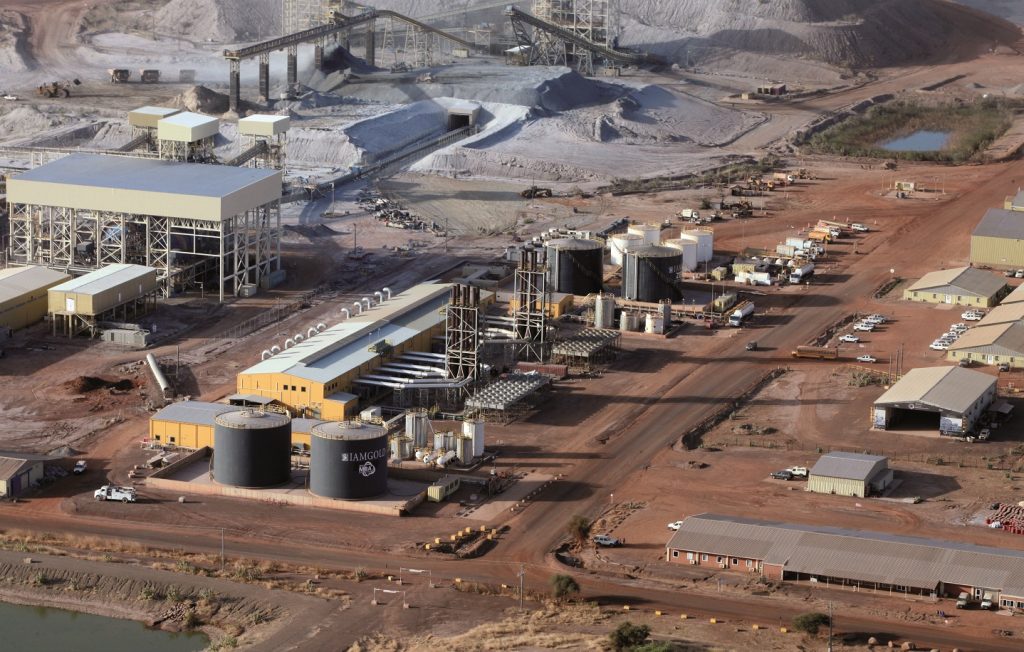
Iamgold (TSX: IMGNYSE: IAG) operates in extremely remote regions of the world, and with mining a highly power intensive business, energy is not something we take for granted. Our Essakane gold mine in Burkina Faso is located in an extremely remote area of the Sahel region, 330 km away from the national electricity grid in the capital city of Ouagadougou, with no connecting transmission line.
Africa is a land greatly deprived of electricity. Total installed grid capacity on the African continent is less than in the country of Spain. With the exception of South Africa, 70% of the sub-Saharan population, or 600 million people, do not have access to grid electricity.
At Essakane, the demand for power is increasing as we mine the hard rock deep within the pit. Our power plant runs on heavy fuel oil (HFO) and our mining fleet on diesel. Power from HFO has accounted for as much as 30% of our operating costs, although less so today with the decline in oil prices.
For several years we have explored options for reducing our reliance on oil to run our operations, including increasing our use of renewable sources of energy.
After the steep decline in the oil price in mid-2014, people questioned whether renewable energy projects were still worth it. My answer to that is: Oil prices should not be the only factor — we have to think long term.
Maintaining a social license to operate is important, so constructing a sustainable power infrastructure that will benefit the communities in which we operate is important when evaluating the returns from renewable energy projects.
Renewable energy projects are not new to Iamgold. In 2014 we built a 5 MW solar power plant at our Rosebel gold mine in Suriname. It is the country's first renewable source of energy, and when we're gone it will be left for the people of Suriname.
We are now eager to embark on a second solar power project at Essakane, but on a much larger scale. The plan is to have a 15 MW solar power plant financed, developed, operated and owned by a private renewable energy company experienced in building solar energy projects in Africa.
The integration of a solar plant with our existing 57 MW thermal power plant would make this the largest hybrid project in West Africa, if not in the world.
In production for six years, Essakane is our largest gold mine, expected to produce between 365,000 and 375,000 oz. gold in 2016. Based on current reserves and resources, we expect production to continue through to 2025.
Two production lines, primary and secondary crushers, semi-autogenous grinding (SAG) and ball mills and leach tanks run 24 hours a day, seven days a week, to process more than 12 million tonnes of ore a year. The thermal power plant consists of 11 generators which operate on HFO that is trucked to the site from the nearby countries of Benin and Togo.
The mining fleet — comprising 30 haul trucks, 13 drill rigs, 9 loading units and an ancillary fleet of 25, including bulldozers and excavators — is powered by diesel, or light fuel oil, that is also trucked to the site.
The deeper we mine in the pit, the higher the proportion of hard rock. In 2012, the percentage of hard rock in the ore mix was less than 10%. We're mining little soft rock today and expect hard rock to account for nearly 100% of the mill feed in 2017. This is based on current mine plan estimates, so it could change somewhat as exploration at Essakane succeeds in securing sources of soft rock within the vicinity of the Essakane mill.
To accommodate an increasing proportion of hard rock, Essakane underwent a major expansion from 2012 to 2013. The power plant was expanded, a new pre-crushing circuit and ore handling system were added, along with a new SAG mill, ball mill and leach tanks.
As the amount of hard rock in the mill feed increases, so does the demand for energy. Hard rock can take three to four times more power to crush and grind than soft rock.
The 57 MW thermal power plant at Iamgold's Essakane gold mine in Burkina Faso. The plant consists of 11 generators which operate on heavy fuel oil trucked in from Benin and Togo. Credit: Iamgold.

Friday, June 20, 2014

Chandler is at it again: Singapore Billionaire Bets Big on #Energy in #Africa, #Asia @Businessweek

Here's a piece on the secretive New Zealand investor from BusinessWeek.


Singapore Billionaire Bets Big on Energy in Africa, Asia

In September 2007, almost a year after New Zealand–born billionaire Richard Chandler founded investment firm Orient Global in Singapore, he made a rare appearance at a forum on social responsibility. Abandoning his penchant for privacy, Chandler outlined the link between giving and investing.
“We start to ask the question, where would the incremental dollar achieve the greatest return?” said Chandler. “Charity is good, performance philanthropy is better, and social investment is best.”
Chandler attended the global executive summit in Singapore again the following year -- and then dropped back out of public view, Bloomberg Markets magazine will report in its July/August issue. He doesn’t speak to the press. Current and former employees of his firm, now called Chandler Corp., don’t talk about him, citing nondisclosure agreements. Executives of most companies in which Chandler invests deal only with his staff.
“I never met him and I don’t know him,” says Indian billionaire Malvinder Singh, whose Fortis Healthcare Ltd. sold its entire stake in Vietnamese hospital company Hoan My Medical Corp. to Chandler Corp. for $80 million in August 2013, according to Fortis’s statement.
Behind the silence, Chandler, 55, is amassing a fortune that the Bloomberg Billionaires Index estimated at $3.7 billion on June 18. Energy-related companies account for at least $1.2 billion of his wealth.

Far-flung Locales

Chandler is betting on gas and oil in far-flung locales from Papua New Guinea to Kenya and Ethiopia, banking on demand from Asia’s growing middle class.
The firm invested in InterOil Corp., which has offices in Singapore and Port Moresby, Papua New Guinea. InterOil controls 35.5 percent of the exploration license that contains Papua New Guinea’s Elk and Antelope fields -- the island nation’s biggest undeveloped gas plays, according to InterOil. Chandler Corp.’s 19.6 percent InterOil stake was valued at $639 million on May 30.
Chandler Corp.’s investments in Southeast Asia extend beyond energy to consumer goods and financial services. The firm holds a $366 million stake in Vietnam’s Masan Group Corp. The company makes foods and beverages, offers banking services and mines tungsten and bismuth. In health care, Chandler Corp. owns a minority share of Medical City, a network of three hospitals and 23 outpatient clinics in the Philippines.
Chandler Corp. says its companies deliver health-care services to more than 2.5 million people in Vietnam and the Philippines each year.

‘Social Value’

“We look to invest in businesses that create social value and drive national prosperity,” Chandler Corp.’s website says.
Chandler is building on a fascination with emerging markets that began with Hong Kong in the 1980s and extended to Brazil, Russia and India. He remains famous for his campaign at SK Corp., South Korea’s largest oil refiner, says Seo Jae Hyeong, chief executive officer of Seoul-based Daishin Asset Management Co.
“People still have vivid memories of how an obscure fund waged a war against the SK chairman,” he says.
Chandler and his younger brother, Christopher, bought 14.99 percent of SK from March 26 to April 11, 2003. The shares had plunged 63 percent in five days earlier that March after SK reported it had misstated 2001 earnings at its trading arm by about $1.5 billion.
The Chandlers fought to oust Chairman Chey Tae Won, who’d been convicted of accounting fraud. Investors bought the shares over two years as the battle intensified, and SK boosted outside directors to 70 percent of the board from 50 percent.
By the time Chey defeated the Chandlers’ bid to remove him, in 2005, the stock had soared more than fivefold from the average 9,293 won per share the brothers paid. They walked away with more than $700 million in gains, calculations based on regulatory filings show.

‘Corporate Governance’

“The Chandler brothers contributed greatly to Korea by raising the awareness of corporate governance and provided an impetus for big companies to change,” Seo says.
Christopher Chandler, 54, now owns Dubai-based investment firm Legatum Group. Last year, his Legatum Foundation started the $100 million Freedom Fund with two partners to combat modern-day slavery. Christopher, like his brother, declined to comment for this story.

Sino-Forest

Richard Chandler stumbled in 2012. Chandler Corp. started buying Chinese timber company Sino-Forest Corp. after the company’s shares, which traded on the Toronto Stock Exchange, plunged 84 percent in two days.
Short seller Carson Block’s research firm said in a June 2, 2011, report that Sino-Forest was overstating the value of its assets. Hedge-fund firm Paulson & Co. sold its entire stake after the report and lost C$462 million ($426 million).
Chandler Corp. continued buying until the Ontario Securities Commission halted trading in August 2011. Chandler Corp. amassed a 19.5 percent stake as Sino-Forest’s biggest shareholder.
Sino-Forest filed for bankruptcy protection in March 2012, and the company has since been taken over by bondholders, according to Chandler Corp. David Walker, a forestry expert who’d been hired to lead a turnaround at Sino-Forest, was named Chandler Corp. CEO in January 2013. Chandler Corp. says Walker no longer works there because the firm isn’t involved with Sino-Forest.

Gas Fortune

One of Chandler Corp.’s current emerging-markets bets is liquefied natural gas. Last year, Asia accounted for 75 percent of global LNG demand of 236.9 million tons, according to the Paris-based International Group of LNG Importers.
Africa is growing as a gas supplier. More than 14 trillion cubic meters (500 trillion cubic feet) has been discovered in Angola, Ghana, Mozambique, Nigeria and Tanzania, according to Seah Moon Ming, CEO of Pavilion Energy Pte, the LNG unit of Temasek Holdings Pte, Singapore’s state-owned investment company.
“You can make a fortune in Africa if you can find oil and gas and if it’s economical to get it out of there,” says Jim Rogers, chairman of Singapore-based Rogers Holdings, who correctly predicted a commodities rally in 1999.
Asia’s deep-pocketed investors are expanding globally by acquiring LNG assets. Pavilion Energy said in November it had invested $1.3 billion in Tanzanian gas blocks. In May, Cheung Kong Group, owned by Li Ka-shing, Asia’s richest man, agreed to acquire Envestra Ltd., an Australian natural gas distributor, for A$2.4 billion ($2.2 billion).

‘Seismic Shift’

“LNG is the future,” says Chua Ma Yu, executive chairman of CMY Capital Markets Sdn. in Kuala Lumpur. “Throughout Asia, governments are building LNG terminals and gas pipelines as they respond to this seismic shift.”
Chandler is hunting for further riches in Africa’s petroleum reserves. Chandler Corp. holds a 9.9 percent stake, valued at $220 million, in Africa Oil Corp., a Canadian company that discovered Kenya’s first crude with a partner, Tullow Oil Plc, in 2012.
Africa Oil is a logical choice for bargain hunters such as Chandler, says Stuart Amor, London-based head of oil and gas research at RFC Ambrian Ltd., a natural resources adviser and broker. 
Recent crude discoveries in Kenya may generate about $10 billion in revenue in three decades of production, London-based GlobalData said in May. In Nigeria, the continent’s biggest oil producer, Chandler Corp. owns 13.4 percent of Union Bank of Nigeria Plc. The lender has more than 350 branches that offer credit to a rising middle class.
“This should enable businesses and entrepreneurs to flourish, supporting and accelerating Nigeria’s economic growth,” Richard Chandler said in an Oct. 19, 2012, statement.

Geothermal Energy

Chandler Corp. is also pursuing geothermal energy through Orka Energy, which operates in China, Iceland and the Philippines; coal-bed methane gas in China via Hong Kong–based Green Dragon Gas Ltd.; and natural gas and power in Indonesia and the Philippines with Energy World Corp.
As Chandler cultivates his empire, he has funded artists and activists who aid the disadvantaged. In 2007, he formed Freedom to Create to encourage change in developing countries. In 2011, the foundation honored Sister Fa, a musician from Senegal who raises awareness about female genital mutilation.
“Mr. Chandler is an incredibly talented investor with a deeply embedded moral purpose,” says Priti Devi, who headed the foundation from 2010 to 2012. Devi says she didn’t find Chandler to be secretive. Instead, she says, “he has adopted what he believes is the most effective operating style for him.”

‘Your Investor’

Chandler isn’t shy about revealing his aspirations on his website.
“My passion is my art -- allocating capital to the world’s best investment opportunities,” he writes.
Newcastle University education policy professor James Tooley recalls Chandler’s commitment to scholarship. After the Financial Times published Tooley’s essay titled “Low-Cost Schools in Poor Nations Seek Investors” in September 2006, Tooley received a voice mail from Chandler.
“Professor Tooley, I’ve read your article,” it said. “I’m your investor.”
Tooley joined Chandler’s Orient Global investment firm in April 2007 as president of its $100 million Education Fund. The fund sought to combat global illiteracy by enhancing education for low-income communities in developing countries. Its Hyderabad, India–based Rumi Education collaborated with more than 100 schools. Chandler dismissed Tooley in 2009; Tooley declined to discuss the circumstances. Rumi Education has since been sold to its management team. Chandler’s education initiatives now involve philanthropic grants, according to Chandler Corp.

New Zealand

Chandler draws inspiration from his mother, Marija, employees who have worked at Chandler Corp. say. A native of Croatia, Marija met her New Zealander husband, Robert Chandler, in 1955. Robert and Marija founded New Zealand luxury department store Chandler House in 1972, according to Chandler Corp.’s website.
As she scoured the world to stock the shelves, Marija instilled an appreciation for hard work, entrepreneurship and creativity in her boys: George, the oldest; Richard, the middle; and Christopher, the youngest. The couple sold Chandler House and gave the proceeds to their sons. The family moved to Monaco, where Richard and Christopher started Sovereign Global Investment in 1986. The brothers split amicably in December 2006. Christopher founded Legatum Capital in Dubai, and Richard set up Orient Global in Singapore.

Business, Art

Marija melded business with art. She began painting and adopted her mother’s name, Ana Tzarev. She also traveled. One YouTube video shows her visiting schoolchildren in Africa. In another, she talks about her billionaire sons at her father’s grave in Trogir, Croatia.
“They thank you for your philosophy on commerce,” she says to her father, “for they’re helping the world because of you.”
Chandler described his business approach to philanthropy at the Singapore forum.
“It’s very much a balance of science and art,” he said. “It’s a capital allocation process. It’s based on information. It’s based on common sense. Think strategic and, above all, sustainability.”
RFC Ambrian’s Amor, who has followed Chandler since the 1990s, offers this assessment of the billionaire investor’s current emerging-markets forays: “It would not be wise to bet against him now.”
To contact the reporters on this story: Yoolim Lee in Singapore at yoolim@bloomberg.net; Netty Ismail in Singapore at nismail3@bloomberg.net
To contact the editors responsible for this story: Michael Serrill at mserrill@bloomberg.net Gail Roche, Jonathan Neumann


Singapore Billionaire Bets Big on Energy in Africa, Asia - Businessweek