Follow us on Twitter

Showing posts with label banks. Show all posts

Tuesday, February 15, 2022

Private Equity Pay ‘dwarfs’ sums on offer to investment bankers

 "I can't think of anything legal that is as good a business model." 

Top private equity firms set aside more than twice as much to pay each employee last year than leading investment banks, underscoring the shift of power and money towards the less regulated corner of Wall Street. 

Flush with profits from buoyant equity markets, Blackstone, KKR and Carlyle Group earmarked $2mn in total pay and benefits per employee in 2021, according to calculations by the Financial Times. That figure was at least twice as high as the per-employee amount set aside at Goldman Sachs, Morgan Stanley and the corporate and investment banking arm of JPMorgan Chase, which have much larger headcounts.

Tuesday, October 19, 2021

J. #Safra Sarasin Snaps Up #Geneva Landmark

J. Safra Sarasin Snaps Up Geneva Property

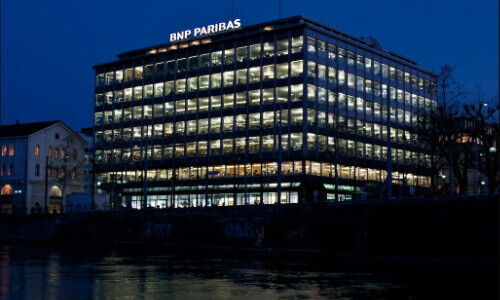
Brazilian-Swiss bank buying BNP's emblematic building in the heart of Geneva's financial district  

Banking group J. Safra Sarasin is buying a 15,000-square meter building in Geneva from BNP Paribas for

Saturday, August 28, 2021

Global #Dividends to Reach Near-Record Payouts. These are the #ETFs to Buy

Global Dividends to Reach Near-Record Payouts? ETFs to Buy

$DVYE $KBWY $DIV $SDIV $KBWD $ALTY

The pandemic has proven to be less detrimental to corporate profits than expected, thanks to super dovish monetary and fiscal policies.  

Global companies are so cash-rich that they are looking to start churning out dividends. 

According to a global study by Janus Henderson Investors, as quoted on a Bloomberg article, payouts are expected to touch $1.39 trillion this year, the second-highest total ever. 

Janus believes that dividends will touch pre-pandemic highs within a year.

Mining companies remain among the biggest dividends payers, benefiting from the revival in commodity prices. Half of the restored payouts in Europe were from banks, Janus said. 

Now that dividend hikes are back, investors can look at the below-mentioned dividend ETFs:

Tuesday, June 1, 2021

#Citibank bites the bullet on #Bitcoin


The biggest change with Bitcoin is the shift from it being primarily a retail-focused endeavor to something that looks attractive for institutional investors.

Thursday, September 24, 2020

Another One Bites The Dust… BNP Shuts Swiss #Commodities #TradeFinance Team—A Sector it Helped Pioneer—After Series of Frauds

BNP Paribas SA is shutting its Swiss commodity trade finance business, exiting a sector it once dominated but has been hit by a series of massive frauds.

The former Paribas investment bank's office in Geneva helped pioneer the use of letters of credit to finance oil trading in the 1970s, and became one of the leading lenders to the industry. However, BNP Paribas had been shrinking in commodity trade finance since 2014, when it was fined $8.9 billion for violating U.S. sanctions.

The plan could impact as many as 120 employees in its Geneva offices, the French bank said in a statement late Tuesday. 

Read the whole story on Bloomberg: https://www.bloomberg.com/news/articles/2020-09-23/bnp-shuts-swiss-commodity-trade-finance-team-in-fraud-hit-sector


____________________


Monday, September 14, 2020

#Swiss financial media reports Weber & Rohner, @UBS & @CreditSuisse board presidents, sounding out possible merger $UBS $CS #MergerMonday

Weber und Rohner prüfen angeblich UBS-CS-Fusion | Unternehmen Finanz | Finanz und Wirtschaft
UBS-VRP Axel Weber should be the driving force behind the plans.
Sounds like bad news for Switzerland's banking sector to have such a high concentration of power in one institution... 

Weber und Rohner prüfen angeblich UBS-CS-Fusion

According to a media report, the board presidents of the two big banks are sounding out a possible merger.

(AWP) The two major Swiss banks UBS ( UBSG 11.3 1.3% ) and Credit Suisse ( CSGN 10.02 1.89% ) want to merge according to a media report. UBS Board of Directors President Axel Weber is planning a merger with CS President Urs Rohner, writes the finance portal "Inside Paradeplatz" on Monday.

The project is called Signal, according to the report from inside the two big banks. Weber was the driving force behind it and spoke to Finance Minister Ueli Maurer about it, said an informant according to the portal. The financial market regulator Finma is also in the picture about Weber's plans. The merger should be agreed in early 2021, and at the end of 2021 Switzerland would have a new financial giant.

Tuesday, August 25, 2020

#Wirecard, With McKinsey’s help, hatched plan to buy @DeutscheBank in bid coverup its #Fraud

With McKinsey's help, Wirecard hatched a plan to acquire Deutsche Bank, offering the German FinTech the prospect of a miraculous exit from the massive fraud it had been perpetrating. 

By blending Wirecard's business into Deutsche's vast balance sheet, it hoped it could be possible to "somehow hide the missing cash and explain it away later in post-merger impairment charges."

There was one catch. To even start preparing such a deal in earnest, the company needed to get a clean bill of health from KPMG, which was conducting a special audit of Wirecard's books. 

The approval from KPMG never came.

Six months later the curtain fell on Wirecard. On June 25, the group collapsed into insolvency after it was exposed as one of Germany's biggest postwar accounting frauds. Prosecutors in Munich suspect that €3.2bn in debt raised since 2015 has been "lost". Around €1bn was handed out in unsecured loans to opaque business partners in Asia.

Wirecard: the frantic final months of a fraudulent operation

Executives at the German payments group hatched a plan to buy Deutsche Bank while desperately trying to cover their tracks

Read the article on the FT here: 


Tuesday, January 15, 2019

#Swiss bank #Vontobel’s #DigitalAssetVault aims to bring the worlds of #crypto-assets and traditional finance closer together


Swiss bank crypto services 'tip of the iceberg'

Matthew Allen, swissinfo.ch

Bank Vontobel sign

Bank Vontobel is the biggest Swiss bank so far to offer crypto trading and storage services for its clients.

(KEYSTONE/Ennio Leanza)

The worlds of crypto-assets and traditional finance have been brought closer together by Swiss bank Vontobel's Digital Asset Vault. More banks are expected to follow suit, often in combination with technology firms to bring cryptocurrencies to the masses.

Digital Asset Vault is a plug-in platform that enables other institutions to both store and trade crypto-assets on behalf of their clients. It combines Vontobel's trading know-how with the expertise of Swiss crypto-company Taurus to solve two problems in one stroke.

The vault allows people to trade cryptocurrencies without the technological hassle of holding their own encrypted private keys. It also lets banks keep cryptocurrencies off balance sheets, which would otherwise force them to hold large amounts of capital in reserve to insure against potential losses.

The aim is to provide a fully regulated corridor to trading in crypto assets that appeals to institutional investors. The platform will focus on cryptocurrencies, such as bitcoin, rather than the forecast wave of tokenised securities.

Last year, Gazprombank Switzerland teamed up with financial software company Avaloq and crypto-storage specialist METACO to develop a similar service. It is due to go live in 2019 once regulatory approval is given.

METACO CEO Adrien Treccani told swissinfo.ch in an interview last month that Gazprombank's adoption of the platform is just the tip of the iceberg. "Many banks want to move into the crypto-market but are waiting for the first movers to overcome regulatory hurdles," he said. "In the next two years most banks will be integrated into this asset class."

"At the moment, there are discussions going on with several banks that are interested in our solution, both in Switzerland and internationally," said Avaloq spokesman Andreas Petrosino. He added that other banks were expected to follow suit once Gazprombank's platform has cleared a path.

No names

Geneva-based Taurus said in its press release on Monday that its crypto-storage platform "is already in production with several leading financial institutions". But the company said it is not allowed to name any of the institutions besides Vontobel.

State-owned telecommunications company Swisscom is also working with financial institutions to ease their path into crypto-assets through its Swiss Blockchain unit.

Vontobel was one of the first banks in Switzerland to dabble in crypto-assets by issuing cryptocurrency-linked tracker certificates from 2016. They were followed by Cornèr Bank and Swiss fintech firm Amun, which released an exchange-traded product on the Swiss stock exchange last November.

Falcon private bank and digital trading platform Swissquote have been early crypto-service adopters too, also by teaming up with crypto-specialists who take custody of the assets. Swissquote allows its own clients to invest in initial coin offerings (ICOs) – crowd-investing schemes used by blockchain firms to raise start-up capital – through its platform.

Bank Zarattini also makes the same offer in combination with crypto-financial services firm Inacta, but this service is also open to investors outside the bank's circle of clients.

There are also at least two brand new financial institutions, Seba and Sygnum, waiting on the sidelines to launch as crypto banks  – provided they get the licenses they seek.

Cold shoulder treatment

It is all a far cry from the cold shoulder treatment that Swiss banks have been giving the growing blockchain industry. Some banks, particularly larger institutions that have had been through tax evasion probes, are still showing extreme caution towards the crypto scene. Vontobel is the largest home-grown Swiss bank to date to break ranks.

A gradual thawing of attitude has been helped by the Swiss government's plans to regulate the blockchain sector while accepting cryptocurrencies as an asset class with an inherent value.  

For some cryptocurrency enthusiasts, merging the likes of bitcoin with the mainstream financial system runs contrary to the spirit of a decentralised economy. They will not be rushing to Vontobel's Digital Asset Vault but will prefer to retain complete control of their cryptocurrencies and exchange them peer-to-peer instead.

Other investors are yet to be convinced by decentralisation but still want to trade crypto-assets. Actors on both sides of the financial industry divide – mainstream and crypto – are increasingly aiming new services to capture this class of investor. 

https://www.swissinfo.ch/eng/banking-on-crypto_swiss-bank-crypto-services--tip-of-the-iceberg-/44679582

Wednesday, November 7, 2018

Former @JPMorgan #metals #trader pleads guilty to #spoofing #gold, #silver, #platinum & #palladium futures contracts on #CME

Former JPMorgan metals trader pleads guilty to spoofing | Financial Times
#DOJ says he learned the practice from "more senior traders at the bank" and used the strategy "hundreds of times with the knowledge and consent of his immediate supervisors", according to the court filing. The charges against Mr Edmonds stated that he conspired with other employees at the New York bank where he worked to manipulate gold, silver, platinum and palladium futures contracts traded on exchanges owned by CME Group.

Incredibly, "JPMorgan, which has long been one of the world's largest bullion traders, is not named in the court documents.

The justice department said the case stemmed from an ongoing investigation by the FBI's New York field office. The criminal information document was filed on October 9 but kept under seal until this week.


Monday, October 15, 2018

#Energy traders and banks back new #blockchain platforms

Energy traders and banks back new blockchain platforms | Financial Times

Royal Dutch Shell, Mercuria and Gunvor, and financial institutions such as ING, Société Générale, Citigroup and ABN Amro are backing two new blockchain platforms.

By digitising the large amount of contracts, letters of credit, invoices and other paperwork currently sent around the world by email, fax or post, and putting them on the Ethereum blockchain platform, they are hoping that the new platforms will lead to faster, cheaper and more secure ways of completing a trade as well as settling the transaction


Energy traders and banks back new blockchain platforms

Aim is to provide faster, cheaper and more secure ways of completing trades

A group of the world's leading energy traders and banks is looking to shake up the centuries-old trade finance industry with the launch of two new platforms underpinned by blockchain technology.

Thursday, March 31, 2016

Standard Chartered Closes #Geneva #Commodities Office Amid Oil Rout


Move leaves bank without a physical presence in city home to the world's largest oil & commodity traders.

Commodity desk set to be moved to London.

Bloomberg reports:

Standard Chartered Closes Geneva Commodity Office Amid Oil Rout

Standard Chartered Plc is closing its office in Geneva, the global center of the commodity-trading industry, in Chief Executive Officer Bill Winters's latest move to slash the lender's exposure to the oil, gas and agricultural industries.
While the bank says commodities trading and agribusiness, or CTA, will continue to be a "core activity," it will be transferred to London as "a consequence of our decision to reduce our overall exposure to commodity-related clients," the bank said in a statement in response to questions. Closing the Geneva office, which opened in 2007, "marks the end of Standard Chartered's client coverage from Switzerland," it said.
The move leaves Standard Chartered without a physical presence in a city home to the world's largest oil traders, including Vitol Group and Mercuria Energy Group Ltd. Traders accounted for $20 billion of Standard Chartered's $40 billion commodity exposure last year, down from $33 billion during 2014, according to its annual report.


Plunging Oil

Winters is undertaking a root-and-branch overhaul of the struggling firm, which made its first annual loss in more than a quarter of a century last year. The CEO had to raise $5.1 billion of capital to shore up its balance sheet amid spiraling losses from loans made during the commodity boom, and has also replaced its entire senior management team while pledging to cut 15,000 jobs and restructure or ditch about $100 billion of assets.
Since mid-2014, the lender has reduced its exposure to commodities by about a third, company filings show, as the price of oil plunged by more than 50 percent from more than $100 a barrel to less than $40. It had $20.4 billion of total exposure to traders at the end of last year, about 8 percent of its $261 billion of loans.
"The key risk for traders, which are less directly affected by price changes, is lack of liquidity and their risk-management practices," the bank said in its annual report. Loan impairments almost doubled to $4 billion in 2015, the highest ever.
While oil and gas accounts for the lion's share of Standard Chartered's natural resource exposure, Winters's review has drilled down as far as its tiny $2 billion diamond portfolio, where he's demanding that borrowers find insurance, provide collateral or repay their debts.

Thursday, August 6, 2015

Inside Royal Bank of Canada’s Latin Misadventure

There's a wholesale clean up going on in Wealth management. 

This time it's RBC that's in the mix. This from the Wall Street Journal 

Inside Royal Bank of Canada’s Latin Misadventure

Brazilian authorities in 2012 charged then-Royal Bank of Canada client Gilberto Miranda Batista with offering bribes to government officials to occupy public land on Goat Island, above. ENLARGE
Brazilian authorities in 2012 charged then-Royal Bank of Canada client Gilberto Miranda Batista with offering bribes to government officials to occupy public land on Goat Island, above. Photo: Juca Varella/Folhapress
By
MIAMI—As Royal Bank of Canada mounted an aggressive campaign to reel in business from Latin America’s growing class of superrich, a Miami-based banker made a big catch: Gilberto Miranda Batista, a former Brazilian senator with a $500 million fortune, three houses, four farms and a Rolls Royce.

While some bankers celebrated, RBC’s compliance department soon raised a warning flag. Worried that Mr. Miranda’s accounts might attract scrutiny from global regulators over potential money laundering, some compliance officers began recommending that the accounts be shut down around 2007, according to people familiar with the episode.

But the Miami banker, Dirceu Magalhaes, successfully argued against axing the prize client, even after Brazilian prosecutors charged Mr. Miranda with corruption in 2012, these people say.

In 2013, Mr. Miranda’s accounts attracted the attention of a U.S. banking regulator, the Office of the Comptroller of the Currency, which that year deemed RBC’s anti-money-laundering controls unsatisfactory, according to people familiar with the matter.

The tensions between compliance and business officials at Canada’s largest bank, revealed in internal company documents seen by The Wall Street Journal, underscore the dilemma faced by many of the world’s financial giants as they balance the promise of lucrative accounts in emerging markets against the increased risk of regulatory action.

Banks from Standard Chartered PLC to HSBC PLC have been pulling out of serving the wealthy in some developing markets, in one of the unintended consequences of a crackdown by global regulators on money laundering and terrorist financing.

For RBC, which weathered the financial crisis to become one of the world’s largest banks, the OCC’s negative review was one in a long line of brushes with regulators and prosecutors over anti-money-laundering controls in its Latin America and Caribbean wealth-management businesses.

RBC moved to close down this business late last year after facing government investigations in several countries, including the U.S., Uruguay, and France. Just as it was unwinding its operations, RBC was contacted by the Department of Justice and by the Department of Homeland Security about separate Venezuelan accounts, according to people familiar with the matter. Those people said the Venezuelan accounts had, like Mr. Miranda’s, been previously flagged by internal compliance officers.

“There is always a war between compliance and bankers,” said Kim Manchester, whose Manchester CF advises banks on anti-money-laundering but who wasn’t commenting specifically on RBC. “Where banks get into trouble is when the banker wins again and again.”

A spokeswoman for RBC said that, due to client confidentiality, it wouldn’t comment on any individual or account, even to confirm or deny that they were customers. The spokeswoman said the bank has a strong record of global regulatory compliance. “RBC works within the legal and regulatory framework of every country in which we operate,” she said in an email.

The Justice Department declined to comment.

Mr. Miranda declined to comment for this article. A lawyer for Mr. Miranda said that his client hasn’t received any formal request from Brazilian courts to present his defense on the pending corruption case and declined further comment.

In a phone call, Mr. Magalhaes said that he had “no concerns” about allegations contained in this article, but declined further comment.

Star client
Much of the RBC drama has played out in an office on Brickell Ave. in Miami’s financial district. That office, where Mr. Magalhaes was based, acted as a U.S. hub to service rich clients across Latin America and the Caribbean as RBC opened offices in Brazil, Chile, Panama, Mexico and Uruguay in 2008 and 2009.

Among Miami’s star clients was Mr. Miranda, who had made a fortune of over $500 million helping companies obtain licenses to set up in the Amazon city of Manaus, according to an internal RBC note seen by The Wall Street Journal. The former senator came from humble origins; some four decades ago he drove a Volkswagen Passat and had a net worth of $10,000, according to the document.

By 2008, Mr. Miranda owned real estate worth $5 million on Ilha das Cabras, or Goat Island, off the coast of São Paulo; three houses worth $10.5 million; a Learjet; four farms; and eight cars, including a Rolls Royce, the note said.

But RBC’s compliance department didn’t share the bankers’ enthusiasm for Mr. Miranda.

Some compliance officers were agitating for the account to be closed around 2007, soon after it was opened, because as a former politician he was viewed as a higher risk, a person familiar with the matter said. In August 2009, an article in Brazilian newspaper Folha de S. Paulo said a company held by Mr. Miranda’s family, KKW do Brasil, made a donation to the foundation of former Brazilian President José Sarney. The article didn’t accuse Mr. Miranda, his family or Mr. Sarney of wrongdoing. Still, press coverage in Brazil reminded compliance officials at RBC of how Mr. Miranda’s political past and connections would be scrutinized by regulators, according to two people familiar with the matter.

                             ENLARGE


Thursday, February 19, 2015

Two Deals Bring Attention to Banking’s Safra Family - NYTimes.com

Two Deals Bring Attention to Banking’s Safra Family

On a single day last fall, two deals were coming together that would draw unusual attention to a banking family that prefers to remain in the shadows.
In London, 30 St. Mary Axe — a pickle-shaped office tower known as the Gherkin that was designed by Norman Foster — was on the brink of changing hands for $1.1 billion. And in New York, shareholders of Chiquita Brands International, the banana producer, were finally leaning toward selling the company, for $1.3 billion.
The buyer for both of these assets was the Safra Group, the investment arm of a storied financial family that strives for secrecy.
Today run by Joseph Safra, the last surviving son of the patriarch who built the family’s initial fortune, the Safra Group manages billions of the family’s personal money. Worth an estimated $14.5 billion according to Forbes, Mr. Safra, 76, is the world’s richest banker.
In addition to the family’s vast and growing real estate holdings, its fortune is bolstered by a network of international banks, including Banco Safra in Brazil, J. Safra Sarasin Holding in Switzerland and Safra National Bank of New York. In total, the family and its banks have more than $200 billion under management, and stockholder equity of more than $15 billion.
With the latest deals, the Gherkin became the face of a Safra real estate portfolio, which includes over 100 properties around the globe, including the 660 Madison Avenue office complex in Midtown Manhattan, and several prime locations in SoHo in Lower Manhattan.
“Their real estate philosophy is very similar to their banking philosophy,” said a person who has worked with the Safra family on property deals and spoke on the condition that he not be named because he did not want to jeopardize his relationship with the family. “It’s really about the preservation of wealth. They look to buy to hold, rather than to sell.”
Indeed, the family has not sold any major real estate assets in decades.
In Chiquita, the Safra Group saw the opportunity to diversify its revenues with a similarly long-term, and public, bet. Demand for bananas, a popular fruit worldwide, is unlikely to subside. And by joining with the Cutrale Group, owned by a Brazilian family with expertise in agriculture that it knew well, Safra was able to branch out without taking on too much risk.
His penchant for privacy aside, Mr. Safra has emerged as a powerful philanthropist in Brazil. Both São Paulo’s Jewish hospital, Albert Einstein, and the hospital founded by the city’s large Arab community, Sírio-Libanês, list Mr. Safra among their largest donors.
Among close associates, Mr. Safra is known to be kind and humble, cooking meals for family and calling on confidants regularly.
“He thinks about his business 24 hours a day, but he found time to call me every day when I was in the hospital after heart surgery,” said Jack Terpins, president of the Latin American Jewish Congress.

Others, who spoke only if they were not identified by name because of Mr. Safra’s power in São Paulo’s financial community, describe an impatient side and a quick temper.

“He likes problems to be solved immediately. You don’t want to disappoint or cross him,” a former employee said.

Yet for his private nature, Mr. Safra has maintained and added to a family fortune that is poised to survive for another 100 years, or more.

“They have a multigenerational time horizon,” said a senior banker who has worked closely with the family. “Not many people have that.”

The Safra family’s standing at the heart of the world’s elite private banking industry is a world away from its roots as traders with the camel caravans that passed through Aleppo, Syria.

It was there, more than 100 years ago, that the Safra family discovered its business acumen, first as merchants and then as amateur bankers. Mr. Safra’s father, Jacob, moved to Beirut and opened a formal bank after World War I, capitalizing on Lebanon’s emergence as a cosmopolitan hub of the Middle East.

After World War II the elder Mr. Safra moved his family to Brazil, and in 1957 established Banco Safra with seven employees. Today, Banco Safra is the eighth-largest bank in the country, with more than $56 billion in assets.

Despite the family’s prominence, Mr. Safra and his relatives are resolutely private. He does not appear in gossip columns and his name has not been associated with politicians or celebrities. In contrast to Brazil’s casual customs, he always wears a suit. Observant of his Sephardic Jewish roots, he keeps a strict kosher diet.

“For most Brazilians, he is a mystery,” said Paulo Feldmann, an economics professor at the University of São Paulo who studies Latin American business culture.

He is largely a mystery to the outside world, too. No member of the Safra family or its companies would comment for this article, following a longstanding policy of not speaking to the news media or making public appearances.

Privacy, however, has not inhibited the family’s ability to expand its reach, or increase its wealth. Several people who work closely with the Safra Group describe a family that measures success by decades and generations, not quarters and fiscal years, and possesses a single-minded focus on maximizing long-term returns for clients and family members.

“They are focused on very, very long-term investing, wherever in the world makes the most sense,” the senior banker said. “They are going to stick to extremely low volatility assets, and proven properties and companies that have meaningful long-term appreciation.”

Behind the philosophy is a maxim espoused by the patriarch, Jacob Safra, and internalized by his sons and grandsons: “If you choose to sail upon the seas of banking, build your bank as you would your boat, with the strength to sail safely through any storm.”

Mr. Safra’s older brother, Edmond, later left Banco Safra and established new banks in Europe and New York. In 1999, he sold Republic National Bank of New York to HSBC for $10 billion. Edmond died in a fire under suspicious circumstances later that year.

Joseph and his younger brother, Moise, ran Banco Safra together until 2006, when Joseph bought out Moise and became the sole owner of Banco Safra. Moise died last year, at 79.

Today, while Joseph remains at the head of the family, his three sons, Jacob, David and Alberto, are assuming more prominent roles. Jacob, the eldest, splits his time between Switzerland and New York, looking after J. Safra Sarasin and Safra National Bank of New York, and nonbank operations outside Brazil. David and Alberto, meanwhile, run Banco Safra in Brazil. Their father is often on the road, shuttling between Brazil, Switzerland and New York.

But success was not always assured. Postwar Brazil suffered first from political instability, then from hyperinflation. The economy lurched from one government plan to another that included capital and currency controls, and even a nationwide freeze of bank accounts.

In that volatile environment, fortunes were made and lost. Mr. Safra focused instead on asset management for wealthy individuals, and on loans to businesses and individuals who could offer solid collateral, such as real estate.

“He always worked on growing slowly and sustainably and keeping the bank very solid,” Mr. Feldmann said. “He looked to hire the most intelligent people, even if they had no experience in banking, trained them himself, and demanded complete loyalty.”

Mr. Feldmann said Mr. Safra was also unusual in wanting to keep his company relatively small so that he could keep a close eye on every aspect of it.

Mr. Safra soon started to buy other, smaller banks and to invest outside the financial sector. He acquired controlling stakes in major Brazilian textile and cellulose companies, and in 1998, in partnership with BellSouth, he founded a cellphone company, BCP, that became Brazil’s second largest.

Despite rapid growth, BCP turned out to be one of Mr. Safra’s few failures. The company racked up huge debts and was finally sold in 2003 at a bargain price to América Móvil, the telecommunications company of the Mexican billionaire Carlos Slim Helú. An earlier co-investment with BellSouth yielded a profit.

Mr. Safra paid $1.1 billion to buy a Swiss private bank, Sarasin, in 2011. The price was high, but Sarasin was a high-quality asset, and it permitted Mr. Safra to expand his asset management business beyond its core client base in Latin America to European and Asian investors.

What is more, it deepened the Safras’ exposure to asset management, traditionally one of the financial world’s most consistently lucrative niches: Year after year, whether markets rise or fall, clients pay a percentage of their assets in fees.

In recent months, however, Mr. Safra has branched out with back-to-back deals for well-known assets that thrust the family back into the headlines.


Mr. Safra believes the price he paid for the Gherkin was a bargain, according to people close to the family. The building was sold out of bankruptcy, and in a subtle change of tack, the Safras believe they have the opportunity to make improvements and raise rents, increasing profits from the building sooner rather than later.


Two Deals Bring Attention to Banking’s Safra Family - NYTimes.com

Monday, November 24, 2014

Best European Stock Bets

October Hedge Funds: Best, Worst, Biggest

Jonathan Herbert doesn’t share other investors’ deep anxiety about a recession in Europe.

One
of the region’s best-performing equity hedge fund managers this year,
the Swiss native runs the Camox fund, a value-driven long-short investor
based in London. Herbert’s fund buys lesser-known small- and mid-cap
European stocks that he believes are on the verge of faster earnings
growth because of a product break-through or a turnaround in their
business.

Leading performer Herbert has played a lot of small-cap European shares
to big gains this year while shorting giants Danone and Unilever. Photo: Chris Gloag for Barron’s

“Even
though Europe is mired in anemic growth, it really doesn’t matter
because our companies are innovating and actively selling their products
in China, Latin America, and the Middle East,” says Herbert, 42. “It’s
paradoxical that many of our companies are exhibiting organic growth
rates between 5% and 20%, when gross-domestic-product growth in Europe
is basically at zero.”

Herbert looks for companies that dominate
narrow global industries. Recent investments have included one in the
aluminum auto-engine-parts business and another in enterprise software
made specifically for banks. By his estimates—usually based on a
multiple of enterprise value divided by earnings before interest and
tax—his picks tend to trade at a 40% discount to their large-cap peers,
and their organic growth rate is four times as fast. He’s short a number
of big, household names.

The preference for small-caps has
evolved over time for Herbert, who was raised in the French-speaking
Swiss village of Cologny by an Israeli father and an American mother. He
first became interested in the group while working as a stockbroker at
Deutsche Bank and then at private bank Lombard Odier Darier Hentsch, in
Zurich. He realized risk-averse institutional investors weren’t fully
exploiting the opportunity.

“If you can capture that explosive
growth in terms of investing in the company at the right point in time,
and if the company is cheap enough that you have a margin of safety,
that is where the money is to be made,” says Herbert, who has a joint
master’s degree in economics and business administration from the
University of Lausanne.

His Camox fund (derived from the Latin
word for a breed of mountain goat native to the Swiss Alps) has posted
outstanding returns this year, rising 24.77% through Sept. 30, according
to fund tracker BarclayHedge. That is nearly six times the MSCI World
Index’s meager 4.33% return in the same period. Over three years, Camox
has returned 33.01% annualized, more than double the MSCI’s 16.80%
return.

The gains helped boost assets under management to $255
million (205 million euros) by early October, from just $7.6 million
when Herbert started with a single analyst in February 2008. Camox’s
management fee ranges from 1.5% to 1.7%, plus a performance fee of 17%
to 20%, depending on how long investors agree to lock up their money in
the fund. Minimum investment is $500,000.

“He does not fall in
love with stocks,” says Gilles Lambotte, a partner at Octogone Group, a
financial advisory in Geneva that has invested in Camox. “He gets in and
out with conviction.” In September, when euro-zone inflation fell to
its lowest level in five years, Herbert believed “the market was
slightly overvalued,” so he liquidated 25% of his portfolio. German
stocks fell by 16% in subsequent weeks, so Herbert used the cash he’d
raised to buy stocks.

Camox currently has 25 long positions and six shorts. Among the bullish bets are Software
(ticker: SOW.Germany). Herbert likes enterprise-software stocks because
the companies collect monthly “maintenance charges” from
customers—usually large companies that can’t risk a shutdown. In the
second quarter, Software suffered a surprising decline in sales at its
“middleware” unit, whose products tie together different databases.
Middleware, for instance, is what allows the computer systems of
law-enforcement agencies and airlines to work together to cross-check
passenger lists for terror suspects. The revenue shortfall caused the
stock to fall 33%.

But Herbert’s research found that the company
had lost a senior sales executive and spent a lot of time seeking
certification to work with the U.S. Defense Department, which hurt
European sales. He’s betting sales will rebound. Camox bought shares at
about €18 each, and by mid-November, the stock had risen to €21.50; he
has a target of €40 over two to three years.

Another favorite is Temenos Group
(TEMN.Switzerland) of Geneva, the largest producer of enterprise
software for banks outside of the U.S. As European banks regain their
footing—their solid scores on recent stress tests suggest as much—they
can again afford to upgrade their information-technology systems.
Foreseeing the banking rebound, Camox started buying the stock for about
16 Swiss francs ($16.64) in February 2012, right after it fell sharply.
Since then, Temenos has nearly tripled, recently trading at CHF33.40
($34.55); Herbert expects it to rise above CHF50.

By quizzing
European companies about their suppliers and competitors, Herbert
occasionally discovers companies scarcely covered by sell-side analysts.
One example is Montupet,
(MON.France), a manufacturer of aluminum components for car engines
that suffered in 2009 when General Motors went bankrupt and orders fell.
Herbert bought the stock in September 2013 for €22, anticipating a
recovery in U.S. auto sales and an increase in outsourcing by German car
makers. Backed by rising revenue and profits, the stock has nearly
tripled, to €64. It could top €100 in two or three years, he says.

Among Herbert’s six short positions are large-cap European consumer stocks, including yogurt maker Danone (BN.France), and food and home-products giant Unilever
(ULVR.UK). He thinks the shares of these dividend-paying, slow-growing
companies are overpriced—selling for more than 20 times
earnings—because European investors are scrambling for protection
against a recession.

Shorting large-caps raises cash for Herbert
to invest in smaller gems that are growing a lot faster. “As long as
Europe doesn’t slip into a prolonged recession, our companies will do
just fine—and prosper,” he says.

E-mail: editors@barrons.com


Best European Stock Bets


Friday, February 14, 2014

The real titans of finance are no longer in the banks @FT

The great irony of the post-2008 regulatory clampdown is that by forcing
established banks to become safer, regulators have given wings to a
gaggle of new financial players
– with potentially unpredictable
consequences. Call it, if you like, a triumph of Wall Street’s
entrepreneurial spirit; or testament to its unseemly ability to run
rings around rules. Either way, financial arbitrage is once again the
theme of the day
, and it is producing the kind of profits that J
Pierpont Morgan would have savoured.


read the whole article from Gillian Tett on the Financial Times:  The real titans of finance are no longer in the banks - FT.com


Friday, August 9, 2013

#Falciani and his stolen data from #Swiss #Banks


From The International Herald Tribune:

Fugitive can name names of Swiss bank account holders


BY DOREEN CARVAJAL AND RAPHAEL MINDER
PARIS — Hervé Falciani is a professed whistle-blower — the Edward Snowden of banking — who has been hunted by Swiss investigators, jailed by Spaniards and claims to have been kidnapped by Israeli Mossad agents eager for a glimpse of the client data he stole while working for a major financial institution in Geneva.
‘‘I am weak and alone,’’ Mr. Falciani said, as three round-the-clock bodyguards provided by the French government looked on with hard stares. The protection was needed, he insisted, because he faces constant risk as the sole key to decipher the encrypted data — five CD-ROMs containing a list of nearly 130,000 account holders that may be the biggest leak ever in the secretive world of Swiss banking.
But as he settled into a deserted bistro for a two-hour lunch, Mr. Falciani, who has been on the run since 2008, seemed oddly relaxed for a fugitive. And why not?
The former computer technician is in high demand these days, having cast himself as a crusader against the murky world of Swiss banking and money laundering. Once dismissed by many European authorities, he and other whistle-blowers are now being courted as the region’s governments struggle to fill their coffers and to stem a populist backlash against tax evasion and corruption.
‘‘It’s an economic war,’’ said Mr. Falciani, an angular man of 41 with a dark goatee who sometimes dons disguises, though on a muggy summer afternoon favored an innocuous beige tie and short-sleeved dress shirt. ‘‘In Switzerland, the banks are so organized that they are able to circumvent new rules and laws to continue to enable tax evasion.’’
Critics, not least at his former employer HSBC, scorn and dismiss Mr. Falciani as a manipulator more dazzled by money than high ideals. The data he has leaked — some say sold — since 2008 has wreaked havoc within the banking world, as well as the moneyed and political classes of Europe.
Mr. Falciani’s information formed the basis for the now famous ‘‘Lagarde list’’ that has roiled Greek politics with its revelations of oligarchs and politicians who avoided taxes by stashing millions in Switzerland. His data is also credited with helping Spain collect 260 million euros ($345 million) in taxes and identify more than 650 tax evaders, including the president of Banco Santander.
In 2012, Mr. Falciani passed his information to American authorities. They, in turn, used the data to pursue an investigation into whether HSBC flouted controls on money laundering, eventually forcing a $1.92 billion settlement with the bank in December.
More than a few rich and powerful people await his next move. Mr. Falciani asserts that only a small portion of the data has been decrypted and used.
Since being released from jail this year after a Spanish judge denied a Swiss extradition request, Mr. Falciani, who is married and has a young daughter, has resurfaced in France. Authorities here have offered protection in exchange for Mr. Falciani giving testimony to local prosecutors who are investigating whether HSBC helped French clients dodge taxes.
‘‘My main objective is to help authorities develop a defense,’’ Mr. Falciani said.
‘‘We are under attack and losing a lot of tax money,’’ he said of the Swiss banking system. ‘‘If you have enemies who want to invade, laws are not enough and you need armies to build an economic defense.’’
A native of Monaco who was educated in the south of France, Mr. Falciani once worked in obscurity as a computer technician at HSBC. In 2005, he was promoted and transferred to Geneva. The following year, he said he raised concerns to his bosses about security flaws in the Swiss system that could violate the privacy of depositors.
Ignored by his superiors, Mr. Falciani said he started collecting the information methodically, in an effort to prove the system was vulnerable. The bank denies that he ever alerted them and believes that he amassed the information over a two-year period.
Early on, Mr. Falciani said he got the brushoff from German bureaucrats who weren’t interested in his trove of data. His information was also shunned in France by the previous administration when ‘‘authorities tried to make evidence disappear and they didn’t want to know,’’ he said.
Then the European economy slumped and governments started to take notice.
In a report from the French National Assembly issued in July, the lawmaker Christian Eckert chided authorities for being slow to use Mr. Falciani’s list. According to Mr. Eckert, the information included 127,311 clients, including 6,313 from France who were suspected of tax evasion.
HSBC dismisses Mr. Falciani’s information as flawed, insisting the small sample the bank has seen is filled with errors. At the time of his employment, the bank contends it had only 100,000 customers and that the stolen data only affected 15,000 clients.
‘‘To our knowledge it has always been Falciani’s intention to sell the data,’’ David Brügger, a bank spokesman, said in an e-mail statement. ‘‘Only faced with the prospect of extradition and extended time behind bars, Falciani decided to cooperate with the Spanish authorities. A scheme he is now repeating with France and other countries.’’
That theory is echoed by Georgina Mikhael, a former HSBC computer consultant who worked with Mr. Falciani in Geneva.
Ms. Mikhael says she helped Mr. Falciani develop a Hong Kong based company, Palorva, to sell data to other banks, initially believing he obtained the information through what he called ‘‘data mining’’ from the Internet. She said they went to Lebanon in 2008 to sell their services to four banks. She said she grew suspicious when Mr. Falciani insisted on using a false Arabic name, Ruben Al-Chidiack, for their business dealings.
‘‘He never gives something for free,’’ said Ms. Mikhael, who noted that after the Lebanon effort failed Mr. Falciani tried to approach German and French intelligence services, usually carrying a knife in his bag because he feared the risks. ‘‘Always he is asking. He is not Robin Hood.’’
Ms. Mikhael, who is currently unemployed and lives in her native Lebanon, says that she was Mr. Falciani’s mistress, believing that he planned to divorce his wife. She is now pursuing a defamation lawsuit against him in France, stemming from his contention that he was kidnapped by Mossad secret agents in Geneva who were seeking bank information about people with Hezbollah ties, including her. Ms. Mikhael says she does not have Hezbollah ties and is Christian.
Mr. Falciani disputes that he is peddling his information for cash and the claims — pressed by Ms. Mikhael — ‘‘are part of moves that people are keen to play’’ to harm his reputation. ‘‘'Never have I or anyone close to me asked or accepted money for information,’’ he said.
In 2012, Swiss authorities gave Mr. Falciani safe pass to meet in Switzerland to discuss a deal to plead guilty to data theft with a suspended sentence, provided he stopped sharing the information. Mr. Falciani said he strung them along to protect his own safety, waiting for a new government in France that might take his claims more seriously.
Now that the political tide has turned, Mr. Falciani wants to continue working with authorities.
As the investigations play out, Mr. Falciani said he was holding down a day job, working for a European Union project as a computer researcher to develop algorithms to detect abnormal behavior. But he worries about his long-term safety, wondering whether he will live another year. He notes that his house has been broken into and that his wife was recently fired from a job at a shoe store because of his notoriety
‘‘This business represents thousands of billions of euros,’’ he said. ‘‘From my side, I’m frightened.’’ ◼


A Fugitive With a Cause - NYTimes.com

Wednesday, May 29, 2013

#Switzerland Moves Toward #US #Tax Deal - WSJ.com

Swiss finance department indicated U.S. pressure had prompted it to act quickly

Swiss banks will be able to deal directly with the DOJ to settle past legal issues over suspected tax evasion by Americans

Switzerland Moves Toward U.S. Tax Deal

ZURICH—Swiss banks will be able to deal directly with the Department of Justice to settle past legal issues over suspected tax evasion by Americans under a framework agreed by the Swiss cabinet, potentially lifting some of the uncertainty hanging over the country's financial sector.
The Swiss Department of Finance said the proposed plan would allow banks not already dealing directly with the DOJ in order to resolve issues to do so.
Banks, which aren't required to participate in the plan, would be allowed to share information regarding business relationships with U.S. clients and the bank employees involved. Banks that do participate will be required to provide protection to their employees, according to the statement from the finance department.
Parliament will act on the proposed deal during its summer session, it said.
The announcement Wednesday comes as pressure builds on Swiss politicians and the financial services industry to break with decades of banking secrecy. Since the onset of the financial crisis, the U.S. has ramped up efforts to track down undeclared assets in order to recover lost tax revenue.
Other countries, including Germany, France and the U.K., are also pressuring Switzerland to act on similar concerns over tax evasion.
The Swiss finance department indicated U.S. pressure had prompted it to act quickly, saying a plan is needed urgently because "the United States is unprepared to wait any longer" to resolve issues involving Swiss banks, which otherwise also would remain vulnerable to the prospect of further criminal investigations and charges.
The finance department didn't name any specific banks. Roughly a dozen banks, including Credit Suisse Group AG and Julius Baer Group AG, have been under investigation for their role in helping Americans evade taxes using Swiss accounts.
In 2009, the DOJ reached a deferred prosecution agreement with UBS AG, under which the Swiss banking paid a $780 million fine.
Credit Suisse has previously disclosed it has set aside 295 million Swiss francs ($306 million) to deal with its U.S. tax matters. Julius Baer, which is far smaller, hasn't set aside any money in relation to the issue.
Julius Baer didn't immediately respond to an emailed request seeking comment on the Swiss plan.
A spokesman at Credit Suisse wasn't immediately reachable to comment.
Next year, banks are expected to begin operating under the Foreign Account Tax Compliance Act, or FATCA, a U.S. law that requires foreign banks to report information about accounts held by U.S. taxpayers to the Internal Revenue Service. FATCA is separate from Wednesday's proposed plan.
Martin Naville, chief executive of the Swiss American Chamber of Commerce in Zurich, said depending on its details and how it is received by the Swiss public the plan for bank settlements could be a critical turning point.
"If we can finally get rid of this banking issue we can get back to normal," Mr. Naville said. "Normal is very positive."
Write to John Letzing at john.letzing@dowjones.com
Copyright 2012 Dow Jones & Company, Inc. All Rights Reserved


Switzerland Moves Toward U.S. Tax Deal - WSJ.com


Monday, April 29, 2013

#Switzerland Shorn of Bankers Proves Industrial Juggernaut - Bloomberg

Behind the headline-grabbing job reductions at Switzerland’s biggest banks is a manufacturing boom that is keeping the economy ahead of the rest of Europe.


Switzerland Shorn of Bankers Proves Industrial Juggernaut
By Patrick Winters - Apr 29, 2013 12:00 AM GMT+0200

Behind the headline-grabbing job reductions at Switzerland’s biggest banks is a manufacturing boom that is keeping the economy ahead of the rest of Europe.

Even after 10,000 Swiss job losses at banks led by UBS AG (UBSN) (UBSN) and Credit Suisse Group AG (CSGN) in the past five years, the nation’s unemployment rate has fallen to 3.1 percent, the lowest of Europe’s 10 biggest economies and less than the rate a decade ago. The nation of 8 million is adding workers in factories that make electrical equipment, airline seating, toilets and drugs.

“People think that precision engineering, watchmaking and the medical industry are minor, but collectively added up, they are quite sizeable in Switzerland,” said Hubertus Von Gruenberg, chairman of Zurich-based ABB Ltd. (ABBN), the world’s largest maker of power transformers. Banks are “overemphasized” in the public perception as there’s a big finance industry relative to the size of the country, he said, adding that the industrial base is “powerful and important.”

Banks and insurers had 152,000 full-time employees last year, compared with 588,000 who work for industrial companies. The banking industry’s share of domestic economic output fell to 6.2 percent in 2011 from 8.7 percent in 2007, according to the most recent data from the Swiss Bankers Association.

“Switzerland is like a Silicon Valley for the manufacturing industry,” said Markus Koch, a partner at Deloitte AG in Zurich. Given the higher cost base, no Swiss manufacturer would survive if it’s not world leading or top quality, he said.
Plane Seating

The focus on high-quality engineering allows companies to compete with cheaper products from emerging markets even as the Swiss franc’s 1.6 percent advance against the euro from a 20- month low in January makes the nation’s exports more expensive.

“We always have to be better than the others, that’s the only way we can compete these days,” said Ilona Illing, director of design at Lantal Textiles, a maker of business class seats for Deutsche Lufthansa AG (LHA) planes.

Global demand for air cushions that replace foams in airplane seats allowed Lantal, which morphed into an airplane seats manufacturer from making cheese cloths more than a century ago, to add 34 jobs last year. The success of the 127-year-old company, based in the Swiss town of Langenthal, and other local manufacturers helped keep the number of jobless in the mountainous canton of Bern at 2.5 percent in February.
Bank Exits

Pressure to stay ahead has pushed Swiss companies from drugmaker Novartis AG (NOVN) to watchmaker Swatch AG to the top of the global rankings for 2012 patent applications. Universities such as Zurich’s Swiss Federal Institute of Technology and a pro- business regulatory environment have helped make Switzerland a home for research hubs for U.S. companies, including International Business Machines Corp. and Google Inc.

The growth in engineering and manufacturing helped to make up for job losses in the finance industry. In response to requests from regulators, Swiss banks have reduced their dependence on borrowed money and exited businesses that fail to deliver big enough returns. Banks employ 10,000 people fewer in Switzerland today than five years ago, the country’s association of banking employees said Jan. 28.

The number of Swiss bankers is set to shrink further after Zurich-based UBS, the country’s largest lender, said in October that it will shed 10,000 jobs globally and abandon most debt- trading operations to focus on money management. Credit Suisse has said it will cut costs by 4.4 billion francs ($4.7 billion) by the end of 2015.
Competitive Nation

With few natural resources apart from water and beautiful landscapes, Swiss companies have focused on specialized, knowledge-based industries because of competition from lower- cost countries, said Peter Chen, a professor at Zurich’s ETH university who has been a member of chemicals-maker Clariant AG (CLN)’s board since 2006.

Switzerland has the world’s highest industrial production per capita and is the most competitive nation overall, according to the World Economic Forum’s Global Competitiveness Report. Industrial production in the country has grown “sharply” since 2005, while traditional manufacturing nations such as Japan and Germany saw only a slight increase, and the U.K. saw a decline, according to a report by Deloitte.

Swiss industrial production per person rose to $12,260 in 2010 from $7,177 in 1991, according to Deloitte.

The country’s resilience is also apparent in the global equity markets.
Treaty of Paris

The Swiss Market Index, which includes the country’s largest companies, gained 28 percent during the past 12 months, outperforming the 18 percent gain of France’s CAC index, the 16 percent advance of Germany’s DAX index and the 12 percent advance of the U.K.’s FTSE 100 index. Eleven of the 20 companies in the Swiss index are industrial companies.

The Swiss success story is rooted in the country’s history as a neutral nation that hasn’t fought a foreign war since its neutrality was established by the Treaty of Paris in 1815. That stability has attracted foreign investors and entrepreneurs.

Brown Boveri & Cie, one of two companies which were merged to form ABB, had founders with foreign roots. One was the son of a British engineer and the other the son of a German doctor. Henri Nestle, a German, started Nestle SA (NESN), the world’s largest maker of food and drink.
Entrepreneurial Spirit

The country’s entrepreneurial spirit is still alive, with biotechnology company Actelion Ltd. (ATLN) being one of the country’s more recent showpiece start-ups. The Allschwil-based company makes drugs designed to treat pulmonary arterial hypertension, an incurable disease characterized by high-blood pressure in the arteries of the lungs. Actelion, founded in 1997 by a team that includes Chief Executive Officer Jean-Paul Clozel, has a market value of 6.5 billion francs.

A report from the European Commission on innovation said Switzerland is the regional “leader,” continuously outperforming all 27 countries in Europe’s political bloc.

Employer-friendly labor laws and a strong work ethic have helped keep job losses to a minimum, Deloitte’s Koch said. Switzerland has some of the longest working hours in Europe and a statutory retirement age of 65, giving companies leeway to cope with the country’s high wages.

“Some companies went to employees and said we have a poor situation with the franc,” Koch said. Workers were asked whether they would work two hours more per week for the next 1 1/2 years and “people agreed,” he said.

Chen from Zurich’s ETH University predicts Switzerland will maintain its industry-focused economy over the long term.

“When you travel around Switzerland, you see the idyllic Swiss alps, but you are never too far away from a chemical factory,” Chen said. “It would be a mistake to move to a pure service economy.”

To contact the reporter on this story: Patrick Winters in Zurich at pwinters3@bloomberg.net

To contact the editor responsible for this story: Simon Thiel at sthiel1@bloomberg.net

Read the article online here: Switzerland Shorn of Bankers Proves Industrial Juggernaut - Bloomberg