Follow us on Twitter

Showing posts with label Africa. Show all posts

Tuesday, January 17, 2017

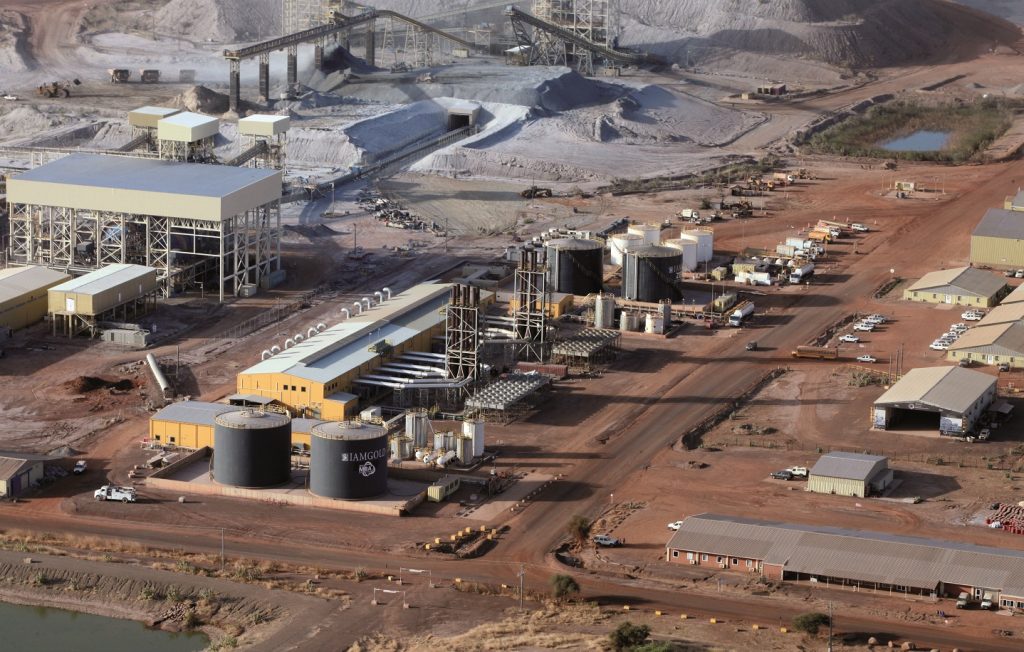
Powering #Iamgold's Essakane #mine in Burkina Faso with #solar

Great piece on the use of solar for Mining at Iamgold's Essakane mine in Burkina Faso


http://www.northernminer.com/environment/commentary-powering-iamgolds-essakane-mine-burkina-faso-solar/1003782352/?utm_source=NM&utm_medium=email&utm_campaign=NM-EN01162017&e=xr20y4rW20w0380wx8w8w69vpsw0yM2vx

Commentary: Powering Iamgold's Essakane mine in Burkina Faso with solar - The Northern Miner

By: Stephen J.J. Letwin, Special to The Northern Miner
Iamgold (TSX: IMGNYSE: IAG) operates in extremely remote regions of the world, and with mining a highly power intensive business, energy is not something we take for granted. Our Essakane gold mine in Burkina Faso is located in an extremely remote area of the Sahel region, 330 km away from the national electricity grid in the capital city of Ouagadougou, with no connecting transmission line.
Africa is a land greatly deprived of electricity. Total installed grid capacity on the African continent is less than in the country of Spain. With the exception of South Africa, 70% of the sub-Saharan population, or 600 million people, do not have access to grid electricity.
At Essakane, the demand for power is increasing as we mine the hard rock deep within the pit. Our power plant runs on heavy fuel oil (HFO) and our mining fleet on diesel. Power from HFO has accounted for as much as 30% of our operating costs, although less so today with the decline in oil prices.
For several years we have explored options for reducing our reliance on oil to run our operations, including increasing our use of renewable sources of energy.
After the steep decline in the oil price in mid-2014, people questioned whether renewable energy projects were still worth it. My answer to that is: Oil prices should not be the only factor — we have to think long term.
Maintaining a social license to operate is important, so constructing a sustainable power infrastructure that will benefit the communities in which we operate is important when evaluating the returns from renewable energy projects.
Renewable energy projects are not new to Iamgold. In 2014 we built a 5 MW solar power plant at our Rosebel gold mine in Suriname. It is the country's first renewable source of energy, and when we're gone it will be left for the people of Suriname.
We are now eager to embark on a second solar power project at Essakane, but on a much larger scale. The plan is to have a 15 MW solar power plant financed, developed, operated and owned by a private renewable energy company experienced in building solar energy projects in Africa.
The integration of a solar plant with our existing 57 MW thermal power plant would make this the largest hybrid project in West Africa, if not in the world.
In production for six years, Essakane is our largest gold mine, expected to produce between 365,000 and 375,000 oz. gold in 2016. Based on current reserves and resources, we expect production to continue through to 2025.
Two production lines, primary and secondary crushers, semi-autogenous grinding (SAG) and ball mills and leach tanks run 24 hours a day, seven days a week, to process more than 12 million tonnes of ore a year. The thermal power plant consists of 11 generators which operate on HFO that is trucked to the site from the nearby countries of Benin and Togo.
The mining fleet — comprising 30 haul trucks, 13 drill rigs, 9 loading units and an ancillary fleet of 25, including bulldozers and excavators — is powered by diesel, or light fuel oil, that is also trucked to the site.
The deeper we mine in the pit, the higher the proportion of hard rock. In 2012, the percentage of hard rock in the ore mix was less than 10%. We're mining little soft rock today and expect hard rock to account for nearly 100% of the mill feed in 2017. This is based on current mine plan estimates, so it could change somewhat as exploration at Essakane succeeds in securing sources of soft rock within the vicinity of the Essakane mill.
To accommodate an increasing proportion of hard rock, Essakane underwent a major expansion from 2012 to 2013. The power plant was expanded, a new pre-crushing circuit and ore handling system were added, along with a new SAG mill, ball mill and leach tanks.
As the amount of hard rock in the mill feed increases, so does the demand for energy. Hard rock can take three to four times more power to crush and grind than soft rock.
The 57 MW thermal power plant at Iamgold's Essakane gold mine in Burkina Faso. The plant consists of 11 generators which operate on heavy fuel oil trucked in from Benin and Togo. Credit: Iamgold.

Friday, June 20, 2014

Chandler is at it again: Singapore Billionaire Bets Big on #Energy in #Africa, #Asia @Businessweek

Here's a piece on the secretive New Zealand investor from BusinessWeek.


Singapore Billionaire Bets Big on Energy in Africa, Asia

In September 2007, almost a year after New Zealand–born billionaire Richard Chandler founded investment firm Orient Global in Singapore, he made a rare appearance at a forum on social responsibility. Abandoning his penchant for privacy, Chandler outlined the link between giving and investing.
“We start to ask the question, where would the incremental dollar achieve the greatest return?” said Chandler. “Charity is good, performance philanthropy is better, and social investment is best.”
Chandler attended the global executive summit in Singapore again the following year -- and then dropped back out of public view, Bloomberg Markets magazine will report in its July/August issue. He doesn’t speak to the press. Current and former employees of his firm, now called Chandler Corp., don’t talk about him, citing nondisclosure agreements. Executives of most companies in which Chandler invests deal only with his staff.
“I never met him and I don’t know him,” says Indian billionaire Malvinder Singh, whose Fortis Healthcare Ltd. sold its entire stake in Vietnamese hospital company Hoan My Medical Corp. to Chandler Corp. for $80 million in August 2013, according to Fortis’s statement.
Behind the silence, Chandler, 55, is amassing a fortune that the Bloomberg Billionaires Index estimated at $3.7 billion on June 18. Energy-related companies account for at least $1.2 billion of his wealth.

Far-flung Locales

Chandler is betting on gas and oil in far-flung locales from Papua New Guinea to Kenya and Ethiopia, banking on demand from Asia’s growing middle class.
The firm invested in InterOil Corp., which has offices in Singapore and Port Moresby, Papua New Guinea. InterOil controls 35.5 percent of the exploration license that contains Papua New Guinea’s Elk and Antelope fields -- the island nation’s biggest undeveloped gas plays, according to InterOil. Chandler Corp.’s 19.6 percent InterOil stake was valued at $639 million on May 30.
Chandler Corp.’s investments in Southeast Asia extend beyond energy to consumer goods and financial services. The firm holds a $366 million stake in Vietnam’s Masan Group Corp. The company makes foods and beverages, offers banking services and mines tungsten and bismuth. In health care, Chandler Corp. owns a minority share of Medical City, a network of three hospitals and 23 outpatient clinics in the Philippines.
Chandler Corp. says its companies deliver health-care services to more than 2.5 million people in Vietnam and the Philippines each year.

‘Social Value’

“We look to invest in businesses that create social value and drive national prosperity,” Chandler Corp.’s website says.
Chandler is building on a fascination with emerging markets that began with Hong Kong in the 1980s and extended to Brazil, Russia and India. He remains famous for his campaign at SK Corp., South Korea’s largest oil refiner, says Seo Jae Hyeong, chief executive officer of Seoul-based Daishin Asset Management Co.
“People still have vivid memories of how an obscure fund waged a war against the SK chairman,” he says.
Chandler and his younger brother, Christopher, bought 14.99 percent of SK from March 26 to April 11, 2003. The shares had plunged 63 percent in five days earlier that March after SK reported it had misstated 2001 earnings at its trading arm by about $1.5 billion.
The Chandlers fought to oust Chairman Chey Tae Won, who’d been convicted of accounting fraud. Investors bought the shares over two years as the battle intensified, and SK boosted outside directors to 70 percent of the board from 50 percent.
By the time Chey defeated the Chandlers’ bid to remove him, in 2005, the stock had soared more than fivefold from the average 9,293 won per share the brothers paid. They walked away with more than $700 million in gains, calculations based on regulatory filings show.

‘Corporate Governance’

“The Chandler brothers contributed greatly to Korea by raising the awareness of corporate governance and provided an impetus for big companies to change,” Seo says.
Christopher Chandler, 54, now owns Dubai-based investment firm Legatum Group. Last year, his Legatum Foundation started the $100 million Freedom Fund with two partners to combat modern-day slavery. Christopher, like his brother, declined to comment for this story.

Sino-Forest

Richard Chandler stumbled in 2012. Chandler Corp. started buying Chinese timber company Sino-Forest Corp. after the company’s shares, which traded on the Toronto Stock Exchange, plunged 84 percent in two days.
Short seller Carson Block’s research firm said in a June 2, 2011, report that Sino-Forest was overstating the value of its assets. Hedge-fund firm Paulson & Co. sold its entire stake after the report and lost C$462 million ($426 million).
Chandler Corp. continued buying until the Ontario Securities Commission halted trading in August 2011. Chandler Corp. amassed a 19.5 percent stake as Sino-Forest’s biggest shareholder.
Sino-Forest filed for bankruptcy protection in March 2012, and the company has since been taken over by bondholders, according to Chandler Corp. David Walker, a forestry expert who’d been hired to lead a turnaround at Sino-Forest, was named Chandler Corp. CEO in January 2013. Chandler Corp. says Walker no longer works there because the firm isn’t involved with Sino-Forest.

Gas Fortune

One of Chandler Corp.’s current emerging-markets bets is liquefied natural gas. Last year, Asia accounted for 75 percent of global LNG demand of 236.9 million tons, according to the Paris-based International Group of LNG Importers.
Africa is growing as a gas supplier. More than 14 trillion cubic meters (500 trillion cubic feet) has been discovered in Angola, Ghana, Mozambique, Nigeria and Tanzania, according to Seah Moon Ming, CEO of Pavilion Energy Pte, the LNG unit of Temasek Holdings Pte, Singapore’s state-owned investment company.
“You can make a fortune in Africa if you can find oil and gas and if it’s economical to get it out of there,” says Jim Rogers, chairman of Singapore-based Rogers Holdings, who correctly predicted a commodities rally in 1999.
Asia’s deep-pocketed investors are expanding globally by acquiring LNG assets. Pavilion Energy said in November it had invested $1.3 billion in Tanzanian gas blocks. In May, Cheung Kong Group, owned by Li Ka-shing, Asia’s richest man, agreed to acquire Envestra Ltd., an Australian natural gas distributor, for A$2.4 billion ($2.2 billion).

‘Seismic Shift’

“LNG is the future,” says Chua Ma Yu, executive chairman of CMY Capital Markets Sdn. in Kuala Lumpur. “Throughout Asia, governments are building LNG terminals and gas pipelines as they respond to this seismic shift.”
Chandler is hunting for further riches in Africa’s petroleum reserves. Chandler Corp. holds a 9.9 percent stake, valued at $220 million, in Africa Oil Corp., a Canadian company that discovered Kenya’s first crude with a partner, Tullow Oil Plc, in 2012.
Africa Oil is a logical choice for bargain hunters such as Chandler, says Stuart Amor, London-based head of oil and gas research at RFC Ambrian Ltd., a natural resources adviser and broker. 
Recent crude discoveries in Kenya may generate about $10 billion in revenue in three decades of production, London-based GlobalData said in May. In Nigeria, the continent’s biggest oil producer, Chandler Corp. owns 13.4 percent of Union Bank of Nigeria Plc. The lender has more than 350 branches that offer credit to a rising middle class.
“This should enable businesses and entrepreneurs to flourish, supporting and accelerating Nigeria’s economic growth,” Richard Chandler said in an Oct. 19, 2012, statement.

Geothermal Energy

Chandler Corp. is also pursuing geothermal energy through Orka Energy, which operates in China, Iceland and the Philippines; coal-bed methane gas in China via Hong Kong–based Green Dragon Gas Ltd.; and natural gas and power in Indonesia and the Philippines with Energy World Corp.
As Chandler cultivates his empire, he has funded artists and activists who aid the disadvantaged. In 2007, he formed Freedom to Create to encourage change in developing countries. In 2011, the foundation honored Sister Fa, a musician from Senegal who raises awareness about female genital mutilation.
“Mr. Chandler is an incredibly talented investor with a deeply embedded moral purpose,” says Priti Devi, who headed the foundation from 2010 to 2012. Devi says she didn’t find Chandler to be secretive. Instead, she says, “he has adopted what he believes is the most effective operating style for him.”

‘Your Investor’

Chandler isn’t shy about revealing his aspirations on his website.
“My passion is my art -- allocating capital to the world’s best investment opportunities,” he writes.
Newcastle University education policy professor James Tooley recalls Chandler’s commitment to scholarship. After the Financial Times published Tooley’s essay titled “Low-Cost Schools in Poor Nations Seek Investors” in September 2006, Tooley received a voice mail from Chandler.
“Professor Tooley, I’ve read your article,” it said. “I’m your investor.”
Tooley joined Chandler’s Orient Global investment firm in April 2007 as president of its $100 million Education Fund. The fund sought to combat global illiteracy by enhancing education for low-income communities in developing countries. Its Hyderabad, India–based Rumi Education collaborated with more than 100 schools. Chandler dismissed Tooley in 2009; Tooley declined to discuss the circumstances. Rumi Education has since been sold to its management team. Chandler’s education initiatives now involve philanthropic grants, according to Chandler Corp.

New Zealand

Chandler draws inspiration from his mother, Marija, employees who have worked at Chandler Corp. say. A native of Croatia, Marija met her New Zealander husband, Robert Chandler, in 1955. Robert and Marija founded New Zealand luxury department store Chandler House in 1972, according to Chandler Corp.รข€™s website.
As she scoured the world to stock the shelves, Marija instilled an appreciation for hard work, entrepreneurship and creativity in her boys: George, the oldest; Richard, the middle; and Christopher, the youngest. The couple sold Chandler House and gave the proceeds to their sons. The family moved to Monaco, where Richard and Christopher started Sovereign Global Investment in 1986. The brothers split amicably in December 2006. Christopher founded Legatum Capital in Dubai, and Richard set up Orient Global in Singapore.

Business, Art

Marija melded business with art. She began painting and adopted her mother’s name, Ana Tzarev. She also traveled. One YouTube video shows her visiting schoolchildren in Africa. In another, she talks about her billionaire sons at her father’s grave in Trogir, Croatia.
“They thank you for your philosophy on commerce,” she says to her father, “for they’re helping the world because of you.”
Chandler described his business approach to philanthropy at the Singapore forum.
“It’s very much a balance of science and art,” he said. “It’s a capital allocation process. It’s based on information. It’s based on common sense. Think strategic and, above all, sustainability.”
RFC Ambrian’s Amor, who has followed Chandler since the 1990s, offers this assessment of the billionaire investor’s current emerging-markets forays: “It would not be wise to bet against him now.”
To contact the reporters on this story: Yoolim Lee in Singapore at yoolim@bloomberg.net; Netty Ismail in Singapore at nismail3@bloomberg.net
To contact the editors responsible for this story: Michael Serrill at mserrill@bloomberg.net Gail Roche, Jonathan Neumann



Singapore Billionaire Bets Big on Energy in Africa, Asia - Businessweek


Friday, January 10, 2014

Africa's road-building frenzy will transform continent @NewScientist

average road density on the continent is 204 kilometres of road per 1000 square kilometres of land area – only a quarter of which is paved. In contrast, the world average is 944 kilometres per 1000 square kilometres with more than half paved

The plan is to expand the existing, 10,000 kilometre-long network of major roads to between 60,000 and 100,000 km – either by upgrading existing poor roads or building new ones.

Expanding and upgrading Africa's sparse highway network could pull people out of poverty – and pose environmental challenges

AFRICA is embarking on a road-building spree. Ahead of the pack are mining organisations, largely funded by China, which have flooded into the continent over the last decade and need ways to transport materials. But also afoot is a larger, pan-African effort to upgrade and expand the continent's highway network, as well as building many more smaller connecting roads.
The result will be a vast continental transformation with the potential to improve access to education and healthcare – and connect Africans to each other, enabling commerce. It's not all good news, however. The roads, especially those built to service mines, could disrupt large tracts of natural habitat. "If you build the roads, there are environmental costs, but if you don't, there are developmental costs," says Jeff Sayer of James Cook University in Cairns, Australia.
The need for infrastructural change is undeniable. Compared with the world average, Africa's existing road network is sparse and poorly maintained. According to a report for the World Bank, average road density on the continent is 204 kilometres of road per 1000 square kilometres of land area – only a quarter of which is paved. In contrast, the world average is 944 kilometres per 1000 square kilometres with more than half paved. This is partly due to Africa's vast area, but its roads look sparse even when viewed by population (see diagram).
Enter the Programme for Infrastructure Development in Africa, or PIDA, funded mainly by African governments, plus international banks, governments and funding agencies. It was launched in 2010 and is due for completion in 2040. Transport makes up 30 per cent of the current budget, and roads are a big part of this.
The plan is to expand the existing, 10,000 kilometre-long network of major roads to between 60,000 and 100,000 km – either by upgrading existing poor roads or building new ones. The result would be nine arteries, some hugging Africa's entire coastline, while others strategically criss-cross the continent. Some 250,000 km of smaller roads will be built or upgraded to connect smaller cities to the main arteries, plus another 70,000 km to plug in rural areas.
What will this achieve? PIDA's goal is to boost trade, spark growth and create jobs. A recent study in Sub-Saharan Africa by the Africa Infrastructure Country Diagnostic near Johannesburg, South Africa, shows how roads can do this. If farmers lived four hours travel time from a city with a population of 100,000, their crop output reached 45 per cent of what was possible because they could easily access tools and supplies such as fertilisers. For farmers eight hours away, the yields collapsed to just 5 per cent. "It's almost incontestable that roads will get them out of that poverty," says Sayer. People certainly want them. "Pretty much all rural communities in Africa will put improved roads at the top of their wish lists," he adds.
There are also likely to be benefits to education. Villages of the Congo basin best served by roads scored highest on a scale grading the effectiveness of education from 5 (best) to 1, according to surveys carried out by Sayer and his colleagues between 2006 and 2009. For example, the scores were 4 or above for each year in the Republic of the Congo, which, aided by investment in education by the forestry company, Congolaise Industrielle des Bois, is relatively well-served by roads. But in the Central African Republic, the worst connected of the countries, they never exceeded 1.3 (Tropical Conservation Science, vol 3, p 262). Sayer adds that healthcare also tends to improve with road-building – perhaps because it is easier to reach medicine and doctors.
But roads bring risks, too, as studies of the road-building already taking place by mining companies can reveal.
In a paper published last month, Sayer and colleagues show that of 4151 known sites of mineral deposits in resource-rich Central Africa, a quarter are in areas of irreplaceable natural habitat, most currently unprotected (Conservation Letters, doi.org/qrk). "In Tanzania, a proposed road to the gold-fields in the Lake Victoria area could bisect the Serengeti National Park and disrupt one of the world's greatest surviving terrestrial wildlife migrations," they report.
Roads can also inflict damage indirectly, by the activities they enable. The Mount Nimba biosphere reserve in the Republic of Guinea, home to chimpanzees that use stone tools and a unique otter shrew (Micropotamogale lamottei), was downsized by 1550 hectares to allow iron-ore prospecting. Likewise, Zambia downgraded the protection status of 19 national parks to permit mining rights.
Bill Laurance, also at James Cook University, is pessimistic about the environmental outcomes of what he describes as a "tsunami" of mining and road-building. "There's a real possibility this could provoke an environmental crisis," he says.
With different goals, the PIDA-enabled roads may be more respectful of the environment than those built to enable mining. PIDA documents acknowledge the need to minimise the environmental impact of transport infrastructure and services.
Roads will affect the environment, says Sayer, but they are vital nonetheless. "Go to any remote village in Africa, they want health and education for their kids and jobs for themselves," he says. "We can't stay in the way of that."

This article appeared in print under the headline "Africa's road to riches"

Where hackers meet the highway

Expanding the network of roads in Africa might be crucial for transporting fertiliser and medicine (see main story), but a host of programmers and engineers hope cellphones, the internet and even drones can help improve education, healthcare and communication in areas the roads won't reach.
"Building roads is part of the solution to poverty, but we need to improve telecommunications as well," says Daniel Stern, founder of UConnect, which aims to use IT to advance education in Uganda, and developer of a low-cost, solar-powered server Pelican Pi.
Stern points out that school textbooks and educational materials are now available through sites such as Khan Academy to children with cheap computers, tablets or cellphones. "We're bringing school to them, rather than the other way round," he says.
Healthcare is also possible over the internet. By accessing sites such as Hesperian health guides or Hifa2015, it's possible for villagers to view videos showing how to safely deliver babies, for example. "E-health is definitely the way to go," says Stern. For farmers, there are services to keep tabs on markets, monitor the weather and obtain finance without having to trek long distances to the nearest town.
Perhaps the most blue-sky idea of all is Matternet, which aims to use drones to deliver supplies to people without access to reliable roads.


Africa's road-building frenzy will transform continent - tech - 10 January 2014 - New Scientist


Wednesday, March 20, 2013

#Tata in #Africa: pioneer forges ahead | beyondbrics

India, is eyeing Africa – and India’s most prominent industrial house, Tata group, is leading the pack.

Tata in Africa: pioneer forges ahead | beyondbrics


When anyone speaks about investment into Africa, China comes to mind. It’s the familiar and contentious story of a developing power drawn to a resource-rich continent.
But now another growing economy, India, is eyeing Africa – and India’s most prominent industrial house, Tata group, is leading the pack.
Raman Dhawan, managing director of Tata Africa Holdings, the group’s strategic investment arm, tolda media briefing this week that revenues from Africa are expected to grow 30 per cent per year – up from $2.3bn in the 2012 fiscal year.
Tata Group’s activities in Africa are executed both through the subsidiary, which was set up in 1994, and through the individual companies themselves. So, there are several plans for the continent.
For instance, Tata Hotels Resorts and Palaces currently has a 166-room hotel in Cape Town and the Taj Pamodzi Hotel in Zambia with another 193 rooms. Dhawan told reporters on Monday that the hospitality business is looking to expand on the continent: “We are considering proposals from three or four countries. All of these properties may not necessarily be in the luxury segment but they would be appropriate for the African market.”
Likewise, Tata Motors, which was responsible for the group’s first foray into Africa when it entered Zambia in 1977, wants to grow into new African markets. Tata Automobiles Corporation SA currently distributes Tata Motors’ vehicles across the country and certain commercial vehicles are assembled in Pretoria too.
R T Wasan, head of international business for commercial vehicles at Tata Motors, told the briefing on Monday: “We are looking at new assembly operations in Tunisia and Kenya through local partners. We are focusing on small, light and medium commercial vehicles.”
Egypt has cottoned on to the group’s plans and is keen to get in on the action. An Egyptian delegation to India is approaching Tata group on Wednesday, hoping for some investment into its troubled economy. The Egyptian minister of investment, Osama Saleh, told the Economic Times:
We will be meeting senior officials from the Tata Group to discuss investments in both automobiles and hotels segment… We do not have any Indian automobile manufacturer in Egypt…We import two-wheelers from Bajaj Auto… So now we hope to see Tatas manufacturing in Egypt.
So far, the group has invested a total $1.7bn in Africa – including both operational and upcoming projects – and the planned expansion will occur in the power, telecommunications, automotive, mining and hospitality businesses. That sounds like a significant inflow into key sectors for a developing market.
Tata’s plans are just one part of wider cooperation between Africa and India. Indian investment into Africa is now close to $50bn. Anand Sharma, union minister for commerce and industry, this week upped the trade target for Africa to $100bn by 2015. The minister added that India is also studying the possibility of a free trade agreement between India and the Common Market for Eastern and Southern Africa, the largest economic grouping in the region.
This is just the beginning of an important south-south relationship.
Related reading:
Exxaro, Tata Power team up in Africa, beyondbrics
Africa calling, FT
Africa must get real about Chinese ties, FT

Read the article online here (Registration req'd): Tata in Africa: pioneer forges ahead | beyondbrics

Sunday, August 19, 2012

The Pivot to #Africa - By Rosa Brooks | Foreign Policy

Africom's activities might cause heartburn for those committed to viewing U.S. military power strictly through a war-fighting lens. Consider this snapshot of recent activities undertaken by or with the assistance of Africom:
  • Construction of school classrooms in Chad
  • Research on the "Association of Sexual Violence and Human Rights Violations With Physical and Mental Health in Territories of the Eastern Democratic Republic of the Congo"
  • Cattle vaccination in Uganda, designed to provide healthy cattle to internally displaced civilians returning to their homes
  • Activities to combat drug trafficking through the West Africa Cooperative Security Initiative
  • Construction of closed wells with solar-powered pumps in Senegal
  • Establishment of an East African Malaria Task Force to combat "one of the biggest killers on the continent: the mosquito"
  • Development of a news and information website aimed at local audiences in the Maghreb region, featuring "analysis, interviews and commentary by paid Magharebia correspondents"
  • Construction of a maternal- and pediatric-care ward at a Ugandan hospital
  • Collaboration with Botswana's military to "promote Botswana's national program of education, HIV screening and male circumcision surgeries"
  • Cooperation with the Sierra Leone Maritime Wing and Fisheries Ministry that "result[ed] in the apprehension of an illegally operating fishing vessel"

The Pivot to Africa

Circumcision, mosquito killing, and other strange doings of Africom.

BY ROSA BROOKS | AUGUST 16, 2012

"A squirrel dying in front of your house may be more relevant to your interests right now than people dying in Africa," Facebook founder Mark Zuckerberg is said to have remarked. For most Americans occupying the now-now-now world of Facebook, this probably feels apt. And until just over a decade ago, Zuckerberg's statement might equally have applied to Pentagon strategists. A 1995 strategy document from the Defense Department was hardly less blunt: "[U]ltimately we see very little traditional strategic interest in Africa."
That began to change in 1998, when U.S. embassies in Kenya and Tanzania were bombed by al Qaeda, and the 9/11 attacks accelerated the change. If terrorism thrives in failed states and ungoverned spaces, it was time to rethink the U.S. approach to Africa, which boasts more than its fair share of basket-case states. By 2006, Africa had been bumped up to "high priority" in the U.S. National Security Strategy: "our security depends upon partnering with Africans to strengthen fragile and failing states and bring ungoverned areas under … control."
As the Pentagon struggles to adapt to a world in which security threats come from increasingly diffuse sources -- and the role of the military is consequently less and less clear-cut -- Africa has become a key laboratory for experimentation and change.
In 2007, the United States created a new geographic combatant command to cover Africa. Africa Command, or Africom, was in part an effort to rationalize a previously incoherent administrative division of labor, in which responsibility for Africa had been divided among three other commands. But it was also a bold experiment: a new kind of command, designed to reflect the Pentagon's emerging understanding of the more complex security environment.
In 2005, Defense Secretary Donald Rumsfeld had signed Directive 3000.05, which declared that "stability operations" would be a core military mission with "priority comparable to combat operations." From its inception, Africom was structured with stability operations, including conflict prevention, in mind. Unlike other combatant commands, Africom was expressly designed to take a "whole-of-government" approach, with senior civilian officials from the State Department, the U.S. Agency for International Development, and other agencies fully integrated into the command's decision-making structure.
This would, in theory, enable conflict prevention in Africa to be addressed holistically, rather than through a traditionally narrow military lens. With its integration of civilian and military power, Africom would not draw sharp or arbitrary distinctions between defense, development, and diplomacy; all three would go hand in hand. And this, President George W. Bush declared, would help "bring peace and security to the people of Africa and promote our common goals of development, health, education, democracy, and economic growth."

The resulting range of Africom's activities might cause heartburn for those committed to viewing U.S. military power strictly through a war-fighting lens. Consider this snapshot of recent activities undertaken by or with the assistance of Africom:
  • Construction of school classrooms in Chad
  • Research on the "Association of Sexual Violence and Human Rights Violations With Physical and Mental Health in Territories of the Eastern Democratic Republic of the Congo"
  • Cattle vaccination in Uganda, designed to provide healthy cattle to internally displaced civilians returning to their homes
  • Activities to combat drug trafficking through the West Africa Cooperative Security Initiative
  • Construction of closed wells with solar-powered pumps in Senegal
  • Establishment of an East African Malaria Task Force to combat "one of the biggest killers on the continent: the mosquito"
  • Development of a news and information website aimed at local audiences in the Maghreb region, featuring "analysis, interviews and commentary by paid Magharebia correspondents"
  • Construction of a maternal- and pediatric-care ward at a Ugandan hospital
  • Collaboration with Botswana's military to "promote Botswana's national program of education, HIV screening and male circumcision surgeries"
  • Cooperation with the Sierra Leone Maritime Wing and Fisheries Ministry that "result[ed] in the apprehension of an illegally operating fishing vessel"
Most of these activities sound laudable. Few would strike the average American as "military" in nature.
Of course, Africom also conducts or facilitates a wide range of more traditional military activities, including various counterterrorism programs run through Operation Enduring Freedom- -Trans Sahara and a range of efforts to help capture Lord’s Resistance Army leaders in Central and East Africa. In 2011, Africom coordinated its first large-scale military operation when President Obama approved Operation Odyssey Dawn, which aimed to enforce the UN-sanctioned no-fly zone in Libya and eliminate the Libyan government’s ability to threaten civilians.
Whether Africom represents a viable new model for the future of the U.S. military naturally depends on your point of view. To some, the Africom approach is downright dangerous. Military traditionalists are apt to view it with suspicion -- as a dangerous slide away from the military's core competencies and the very apotheosis of "mission creep." Many civilian observers are equally skeptical, viewing Africom as further evidence of the militarization of U.S. foreign policy -- and of the devaluing and evisceration of civilian capacity. "The Pentagon is muscling in everywhere," complained former State Department official Thomas Schweich in a Washington Post op-ed: "[W]hy exactly do we need a military command [in Africa] running civilian reconstruction, if not to usurp the efforts led by well-respected U.S. embassies and aid officials?"

Such views are understandable but shortsighted. The Pentagon is right to see poverty, underdevelopment, disease, repression, human rights abuses, and conflict as likely drivers of future security threats to the United States. And if the Defense Department's job is to protect the United States, that mission must surely include preventing threats.
In some imaginary utopia, the military might work hand in hand with capable, well-resourced civilian agencies, neatly dividing up roles and leaving the "civilian" tasks to the civilians. But that's not the world we live in. Yes, the civilian sector has been eviscerated by two decades of underresourcing and has consequently struggled to attract and retain personnel with key skills. But given today's political climate, this situation is unlikely to change -- at least not in the foreseeable future. Congress shows zero interest in substantially boosting the foreign affairs budget. That's a crying shame, but it is what it is.
Inevitably, this means that the Defense Department will have to step into the breach. How could it responsibly refrain? As a State Department inspector general's report commented in 2009, Africom's role was "resented and challenged" by the State Department's Bureau of African Affairs, but the military was essentially "stepping into a void created by a lack of resources for traditional development" and other "civilian" tasks.
More importantly, the lines between "civilian" and "military" tasks have never been as clear as we like to pretend, and today they're blurrier than ever. Instead of wasting time in a fruitless effort to draw imaginary lines between civilian and military roles, the United States should focus instead on doing what needs to be done -- and doing it responsibly, transparently, and well.
That's where the country has been falling badly short. Africom has been justly criticized for failing to live up to its lofty goals. A clumsy early rollout also left Africom struggling to allay African suspicions that the United States intended to "recolonize" Africa, and for a variety of reasons (shortage of qualified and interested personnel, inadequate career incentives, a slow-moving personnel system), many civilian slots within Africom were never filled. Those that were filled weren't always put to good use, and Africom continues to struggle to coordinate its efforts with civilian agencies.
The Defense Department is a relative amateur when it comes to development and related activities, and often it shows. Lack of cultural awareness has plagued programming: The distribution of used clothes in Djibouti during Ramadan offended Muslim sensibilities, for instance, and Africom has also been criticized for failing to take local clan relationships into account when distributing assistance.

Poor management is also a serious problem. Africom's first commander, General William “Kip” Ward, is currently under investigation for alleged misuse of funds. A 2011 Government Accountability Office report on DOD humanitarian activities found systemic management and accountability problems across the Defense Department, concluding grimly that, while there have been some improvements over the years, "DOD does not have complete information on the full range of humanitarian assistance projects it conducts.… DOD does not know … when a project is going to be implemented, when it is in progress, or when and if it has been completed.… DOD does not know how much it has spent.… DOD is not consistently evaluating its projects, and therefore it cannot determine whether its humanitarian assistance efforts are meeting their intended goals, having positive effects, or represent an efficient use of resources."
These problems are not unique to Africom. As other combatant commands have similarly expanded their activities into traditionally civilian domains, they have struggled with similar problems and criticism.
In a sense, we currently inhabit the worst of all possible worlds: The military is increasingly taking on traditionally civilian jobs but doing them clumsily and often halfheartedly, without investing fully in developing the skills necessary for success. Meanwhile, civilian agencies mostly just grumble from the sidelines, waiting for that happy day when Congress gets serious about rebuilding civilian capacity. (I think Samuel Beckett wrote a play about that.) And few people, inside or outside the Pentagon, are taking seriously the need to think in new ways about what "whole-of-government" or a holistic approach to security might truly mean.
The blurring of civilian and military roles is inevitable, but the failure to grapple effectively with this blurring of roles is not. To address threats (and seize opportunities) in this globalized, blurry, chaotic world, we will need to develop new competencies, flexible new structures, and creative new accountability mechanisms. Most critically, we'll need to let go of our comfortable old assumptions about roles and missions.
JIM WATSON/AFP/Getty Images
 
Rosa Brooks is a law professor at Georgetown University and a Schwartz senior fellow at the New America Foundation. She served as a counselor to the U.S. defense undersecretary for policy from 2009 to 2011 and previously served as a senior advisor at the U.S. State Department. Her weekly column runs every Thursday and is accompanied by a blog, By Other Means.

The Pivot to Africa - By Rosa Brooks | Foreign Policy