Venezuelan Refugees Send Billions Back Home, Helping the Lucky Survive - Bloomberg
"Venezuela has essentially stopped exporting oil and in its place, started exporting people."
"Venezuela is moving in the direction of Haiti"
"Oil production has plunged almost two-thirds in the past 16 years, turning the country with the world's biggest proven reserves into a mere fringe player in global markets. Venezuelans, meanwhile, are fleeing in droves. An estimated 1.6 million have left since 2015—roughly 5 percent of the population. The United Nations now estimates that are some 2.3 million Venezuelans living abroad, while in 2005 there were only 437,000.
"This new export is paying dividends. As the Venezuelan diaspora earns ever greater income, they're sending more to struggling relatives back home. Remittances surged to $1.5 billion in 2017 and will climb a further 60 percent this year to $2.4 billion, according to Caracas-based consultancy Ecoanalitica"
Venezuelan Refugees Send Billions Back Home, Helping the Lucky Survive
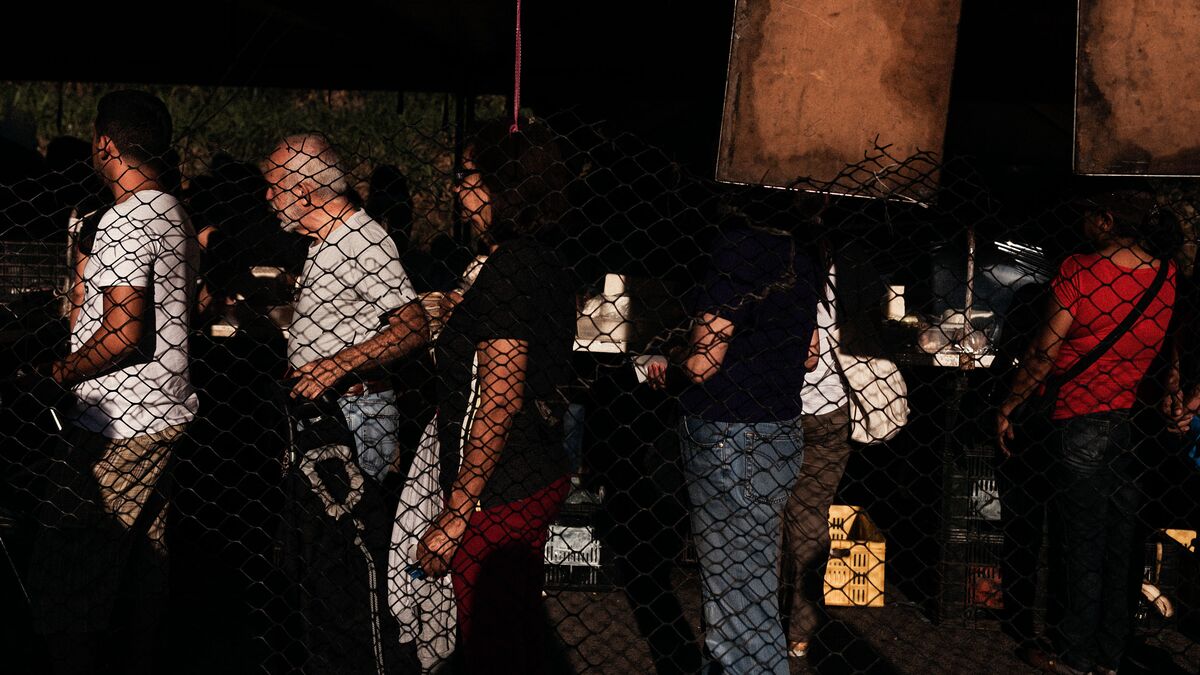
The transfers, as little as $10 a month, trickle into people's pockets through networks of small businesses and relatives fortunate enough to have a foreign bank account.
Venezuela has essentially stopped exporting oil and in its place, started exporting people.
Oil production has plunged almost two-thirds in the past 16 years, turning the country with the world's biggest proven reserves into a mere fringe player in global markets. Venezuelans, meanwhile, are fleeing in droves. An estimated 1.6 million have left since 2015—roughly 5 percent of the population. The United Nations now estimates that are some 2.3 million Venezuelans living abroad, while in 2005 there were only 437,000.
This new export is paying dividends. As the Venezuelan diaspora earns ever greater income, they're sending more to struggling relatives back home. Remittances surged to $1.5 billion in 2017 and will climb a further 60 percent this year to $2.4 billion, according to Caracas-based consultancy Ecoanalitica.
This is a paltry sum, compared to the riches that a good year of oil exports can generate. And it's just a fraction of what traditional remittance-dependent nations receive. (Tiny El Salvador, for instance, takes in some $5 billion a year.) But in a country where millions have been driven into deep poverty by hyperinflation and economic paralysis, every dollar counts.
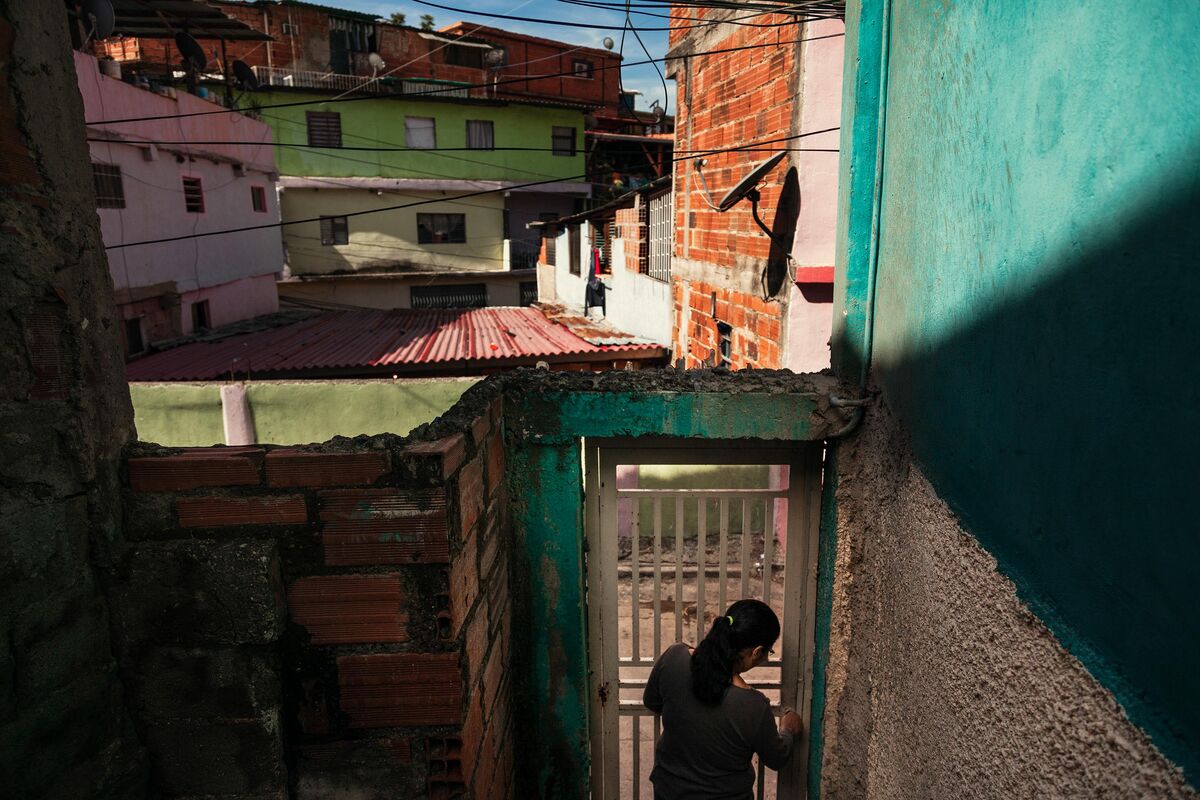
Kelly Marcano leaves her home in Petare, a slum in Caracas.
The transfers, as little as $10 a month, evade currency controls and trickle into Venezuelans' pockets through networks of small businesses and relatives lucky enough to possess foreign bank accounts. Ecoanalitica estimates that roughly 2.1 million Venezuelans sent money home last year.
There's a wholesale clean up going on in Wealth management.
This time it's RBC that's in the mix. This from the Wall Street Journal
Inside Royal Bank of Canada’s Latin Misadventure
ENLARGE
Brazilian authorities in 2012 charged then-Royal Bank of Canada client Gilberto Miranda Batista with offering bribes to government officials to occupy public land on Goat Island, above. Photo: Juca Varella/Folhapress
By
Alistair MacDonald and
Rita Trichur
MIAMI—As Royal Bank of Canadamounted an aggressive campaign to reel in business from Latin America’s growing class of superrich, a Miami-based banker made a big catch: Gilberto Miranda Batista, a former Brazilian senator with a $500 million fortune, three houses, four farms and a Rolls Royce.
While some bankers celebrated, RBC’s compliance department soon raised a warning flag. Worried that Mr. Miranda’s accounts might attract scrutiny from global regulators over potential money laundering, some compliance officers began recommending that the accounts be shut down around 2007, according to people familiar with the episode.
But the Miami banker, Dirceu Magalhaes, successfully argued against axing the prize client, even after Brazilian prosecutors charged Mr. Miranda with corruption in 2012, these people say.
In 2013, Mr. Miranda’s accounts attracted the attention of a U.S. banking regulator, the Office of the Comptroller of the Currency, which that year deemed RBC’s anti-money-laundering controls unsatisfactory, according to people familiar with the matter.
The tensions between compliance and business officials at Canada’s largest bank, revealed in internal company documents seen by The Wall Street Journal, underscore the dilemma faced by many of the world’s financial giants as they balance the promise of lucrative accounts in emerging markets against the increased risk of regulatory action.
Banks from Standard CharteredPLC to HSBCPLC have been pulling out of serving the wealthy in some developing markets, in one of the unintended consequences of a crackdown by global regulators on money laundering and terrorist financing.
For RBC, which weathered the financial crisis to become one of the world’s largest banks, the OCC’s negative review was one in a long line of brushes with regulators and prosecutors over anti-money-laundering controls in its Latin America and Caribbean wealth-management businesses.
RBC moved to close down this business late last year after facing government investigations in several countries, including the U.S., Uruguay, and France. Just as it was unwinding its operations, RBC was contacted by the Department of Justice and by the Department of Homeland Security about separate Venezuelan accounts, according to people familiar with the matter. Those people said the Venezuelan accounts had, like Mr. Miranda’s, been previously flagged by internal compliance officers.
“There is always a war between compliance and bankers,” said Kim Manchester, whose Manchester CF advises banks on anti-money-laundering but who wasn’t commenting specifically on RBC. “Where banks get into trouble is when the banker wins again and again.”
A spokeswoman for RBC said that, due to client confidentiality, it wouldn’t comment on any individual or account, even to confirm or deny that they were customers. The spokeswoman said the bank has a strong record of global regulatory compliance. “RBC works within the legal and regulatory framework of every country in which we operate,” she said in an email.
The Justice Department declined to comment.
Mr. Miranda declined to comment for this article. A lawyer for Mr. Miranda said that his client hasn’t received any formal request from Brazilian courts to present his defense on the pending corruption case and declined further comment.
In a phone call, Mr. Magalhaes said that he had “no concerns” about allegations contained in this article, but declined further comment.
Star client
Much of the RBC drama has played out in an office on Brickell Ave. in Miami’s financial district. That office, where Mr. Magalhaes was based, acted as a U.S. hub to service rich clients across Latin America and the Caribbean as RBC opened offices in Brazil, Chile, Panama, Mexico and Uruguay in 2008 and 2009.
Among Miami’s star clients was Mr. Miranda, who had made a fortune of over $500 million helping companies obtain licenses to set up in the Amazon city of Manaus, according to an internal RBC note seen by The Wall Street Journal. The former senator came from humble origins; some four decades ago he drove a Volkswagen Passat and had a net worth of $10,000, according to the document.
By 2008, Mr. Miranda owned real estate worth $5 million on Ilha das Cabras, or Goat Island, off the coast of São Paulo; three houses worth $10.5 million; a Learjet; four farms; and eight cars, including a Rolls Royce, the note said.
But RBC’s compliance department didn’t share the bankers’ enthusiasm for Mr. Miranda.
Some compliance officers were agitating for the account to be closed around 2007, soon after it was opened, because as a former politician he was viewed as a higher risk, a person familiar with the matter said. In August 2009, an article in Brazilian newspaper Folha de S. Paulo said a company held by Mr. Miranda’s family, KKW do Brasil, made a donation to the foundation of former Brazilian President José Sarney. The article didn’t accuse Mr. Miranda, his family or Mr. Sarney of wrongdoing. Still, press coverage in Brazil reminded compliance officials at RBC of how Mr. Miranda’s political past and connections would be scrutinized by regulators, according to two people familiar with the matter.
Excellent piece on the predicament of Venezuela as it faces a cash crunch. More than $6 billion are due by the end of the year, an amount that would devastate its foreign reserves, currently at just over $9 billion.
Should Venezuela Default?
By Ricardo Hausmann and Miguel Angel Santos
Ricardo Hausmann, former Venezuelan Planning minister and chief Economist at the IADB, and Miguel Angel Santos are professors at Harvard University.
CAMBRIDGE – Will Venezuela default on its foreign bonds? Markets fear that it might. That is why Venezuelan bonds pay over 11 percentage points more than US Treasuries, which is 12 times more than Mexico, four times more than Nigeria, and double what Bolivia pays. Last May, when Venezuela made a $5 billion private placement of ten-year bonds with a 6% coupon, it effectively had to give a 40% discount, leaving it with barely $3 billion. The extra $2 billion that it will have to pay in ten years is the compensation that investors demand for the likelihood of default, in excess of the already hefty coupon.
Venezuela’s government needs to pay $5.2 billion in the first days of October. Will it? Does it have the cash on hand? Will it raise the money by hurriedly selling CITGO, now wholly owned by Venezuela’s state oil company, PDVSA?
A different question is whether Venezuela should pay. Granted, what governments should do and what they will do are not always independent questions, because people often do what they should. But “should” questions involve some kind of moral judgment that is not central to “will” questions, which makes them more complex.
One point of view holds that if you can make good on your commitments, then that is what you should do. That is what most parents teach their children.
But the moral calculus becomes a bit more intricate when you cannot make good on all of your commitments and have to decide which to honor and which to avoid. To date, under former President Hugo Chávez and his successor, Nicolás Maduro, Venezuela has opted to service its foreign bonds, many of which are held by well-connected wealthy Venezuelans.
Yordano, a popular Venezuelan singer, probably would have a different set of priorities. He was diagnosed with cancer earlier this year and had to launch a social-media campaign to locate the drugs that his treatment required. Severe shortages of life-saving drugs in Venezuela are the result of the government’s default on a $3.5 billion bill for pharmaceutical imports.
A similar situation prevails throughout the rest of the economy. Payment arrears on food imports amount to $2.4 billion, leading to a substantial shortage of staple goods. In the automobile sector, the default exceeds $3 billion, leading to a collapse in transport services as a result of a lack of spare parts. Airline companies are owed $3.7 billion, causing many to suspend activities and overall service to fall by half.
In Venezuela, importers must wait six months after goods have cleared customs to buy previously authorized dollars. But the government has opted to default on these obligations, too, leaving importers with a lot of useless local currency. For a while, credit from foreign suppliers and headquarters made up for the lack of access to foreign currency; but, given mounting arrears and massive devaluations, credit has dried up.
In addition, Venezuela’s central bank has defaulted on its obligation to maintain price stability by nearly quadrupling the money supply in 24 months, which has resulted in a 90% decline in the bolivar’s value on the black market and the world’s highest inflation rate. To add insult to injury, since May the central bank has defaulted on its obligation to publish inflation and other statistics.
Venezuela functions with four exchange rates, with the difference between the strongest and the weakest being a factor of 13. Unsurprisingly, currency arbitrage has propelled Venezuela to the top ranks of global corruption indicators.
All of this chaos is the consequence of a massive fiscal deficit that is being financed by out-of-control money creation, financial repression, and mounting defaults – despite a budget windfall from $100-a-barrel oil. Instead of fixing the problem, Maduro’s government has decided to complement ineffective exchange and price controls with measures like closing borders to stop smuggling and fingerprinting shoppers to prevent “hoarding.” This constitutes a default on Venezuelans’ most basic freedoms, which Bolivia, Ecuador, and Nicaragua – three ideologically kindred countries that have a single exchange rate and single-digit inflation – have managed to preserve.
So, should Venezuela default on its foreign bonds? If the authorities adopted common-sense policies and sought support from the International Monetary Fund and other multilateral lenders, as most troubled countries tend to do, they would rightly be told to default on the country’s debts. That way, the burden of adjustment would be shared with other creditors, as has occurred in Greece, and the economy would gain time to recover, particularly as investments in the world’s largest oil reserves began to bear fruit. Bondholders would be wise to exchange their current bonds for longer-dated instruments that would benefit from the upturn.
None of this will happen under Maduro’s government, which lacks the capacity, political capital, and will to move in this direction. But the fact that his administration has chosen to default on 30 million Venezuelans, rather than on Wall Street, is not a sign of its moral rectitude. It is a signal of its moral bankruptcy.


 ENLARGE
 ENLARGE

