Bitcoin's parabolic price rise was the big story of 2017 – putting the spotlight on the cryptocurrency market. While gold's performance was a solid 13%, it was a fraction of the 13-fold increase of bitcoin by the end of the year. Some commentators went as far as to claim cryptocurrencies could replace gold. Cryptocurrencies may become an established part of the financial system. But, in our view, gold is very different from cryptocurrencies, as gold:
is less volatile
has a more liquid market
trades in an established regulatory framework
has a well understood role in an investment portfolio
has little overlap with cryptocurrencies on many sources of demand and supply.
These characteristics underpin gold's role as a mainstream financial asset that will likely continue to resonate in today's digital world.
2017 Top 5 Individual Gold Funds by US dollar flows
Xetra-Gold accumulated US$2.3bn
iShares Gold Trust added US$2bn
Source Physical Gold ETC added US$1.1bn
SPDR® Gold Shares accumulated US$923mn
iShares Physical Gold ETC added US$721.5mn
Gold-backed ETFs added 197.5t in 2017, growing assets by 8.4%
Our monthly analysis of gold-backed ETFs and similar products, provides detailed information and insight on global trends of gold investment demand through ETFs.
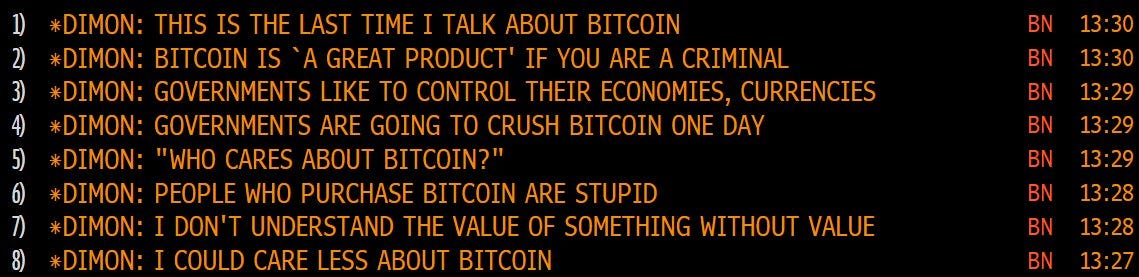
It's easy to believe cryptocurrencies have no inherent value. Or that governments will crush them.
It's also becoming fashionable to believe the opposite: that they will disrupt banks, governments, and Silicon Valley giants once and for all.
Neither extreme is true.
The reality is nuanced and important. Which is why I've decided to write you this briefing note. I hope it helps you appreciate cryptocurrencies more deeply.
Let me start by stating that I believe:
The market for cryptocurrencies is overheated and irrationally exuberant
There are a lot of poseurs creating them, and some scammers, too
There are a lot of conflicts of interest, self-serving hype, and obfuscation
Very few people in the media understand what's going on
Very few people in finance understand what's going on
Very few people in technology understand what's going on
Very few people in academia or government understand what's going on
Very few people buying cryptocurrencies understand what's going on
It's very possible I don't understand what's going on
Also:
Banks and governments aren't going away
Traditional software isn't going away
In short: there's a lot of noise. But there is also signal. To find it, we need to start by defining cryptocurrency.
Without a working definition we are lost. Most people arguing about cryptocurrencies are talking past each other because they don't stop to ask the other side what they think cryptocurrencies are for.
Here's my definition: cryptocurrencies are a new asset class that enable decentralized applications.
If this is true, your point of view on cryptocurrencies has very little to do with what you think about them in comparison to traditional currencies or securities, and everything to do with your opinion of decentralized applications and their value relative to current software models.
Don't have an opinion on decentralized applications? Then you can't possibly have one on cryptocurrencies yet, so read on.
And since this isn't about cryptocurrencies vs. fiat currencies let's stop using the word currency. It's a head fake. It has way too much baggage and I notice that when you talk about Bitcoin in public you keep comparing it to the Dollar, Euro, and Yen. That comparison won't help you understand what's going on. In fact, it's getting in the way. So for the rest of this note, I will refer to cryptocurrencies as crypto assets.
So, to repeat: crypto assets are a new asset class that enable decentralized applications.
And like every other asset class, they exist as a mechanism to allocate resources to a specific form of organization. Despite the myopic focus on trading crypto assets recently, they don't exist solely to be traded. That is, in principle at least, they don't exist for their own sake.
To understand what I mean, think about other asset classes and what form of organization they serve:
Corporate equities serve companies
Government bonds serve nations, states, municipalities
Mortgages serve property owners
And now:
Crypto assets serve decentralized applications
Decentralized applications are a new form of organization and a new form of software. They're a new model for creating, financing, and operating software services in a way that is decentralized top-to-bottom. That doesn't make them better or worse than existing software models or the corporate entities that create them. As we'll see later, there are major trade-offs. What we can say is simply that they are radically different from software as we know it today and radically different from the forms of organization we are used to.
How different? Imagine the following: you grew up in a rainforest and I brought you a cactus and told you it was a tree. How would you react? You'd probably laugh and say it's not a tree because there's no point in a tree being a stumpy water tank covered in armor — after all, water is abundant here in the rainforest! This, roughly, is the reaction of many people working in Silicon Valley to decentralized applications.
But I digress. I owe you an important explanation:
What is a decentralized application?
A decentralized application is a way to create a service that no single entity operates.
We'll come to the question of whether that's useful in a moment. But first, you need to understand how they work.
John Mauldin shows us the absurdity of this market.
• A painting (which may be fake) sold for $450 million.
• #Bitcoin (which may be worthless) soared nearly 700% from $952 to ~$8000 (Nb : since this was written 2 weeks ago, it's now more than double that...).
• #QE: The Bank of Japan and the European Central Bank bought $2 trillion of assets.
• Global #debt rose above $225 trillion to more than 324% of global GDP.
• US corporations sold a record $1.75 trillion in bonds.
• European #highyield bonds traded at a yield under 2%.
• #Argentina, a serial defaulter, sold 100-year bonds in an oversubscribed offer.
• Illinois, hopelessly insolvent, sold 3.75% bonds to bondholders fighting for allocations.
• Global stock market capitalization skyrocketed by $15 trillion to over $85 trillion and a record 113% of global GDP.
• The market cap of the #FANGs increased by more than $1 trillion.
• S&P 500 #volatility dropped to 50-year lows and Treasury volatility to 30-year lows.
• Money-losing @Tesla Inc. sold 5% bonds with no covenants as it burned $4+ billion in cash and produced very few cars.
This is a joyless bubble, however. It is accompanied by political divisiveness and social turmoil as the mainstream media hectors the populace with fake news. Immoral behavior that was tolerated for years is finally called to account while a few brave journalists fight against establishment forces to reveal deep corruption at the core of our government (yes, I am speaking of Uranium One and the Obama Justice Department). In 2018, a lot of chickens are going to come home to roost in Washington, D.C., on Wall Street, and in the media centers of New York City and Los Angeles. Icons will be blasted into dust as the tides of cheap money, cronyism, complicity, and stupidity recede. Beware entities with too much debt, too much secrecy, too much hype. Beware false idols. Every bubble destroys its idols, and so shall this one
5 Charts That Show We Are on the Brink of an Unthinkable Crisis
Top executives at Guggenheim Partners carried out a series of deals with companies close to the Wall Street firm’s leadership that have triggered concerns over possible favouritism and self-dealing from its own internal compliance, auditing and investment teams, a Financial Times investigation has found.
The deals saw the $240bn Wall Street asset manager invest at least $1bn of client money in companies where Guggenheim’s top officers and biggest shareholders had personal ties, transactions that were in some cases red flagged by the firm’s own compliance department for a lack of due diligence.
The investments have prompted inquiries by the US Securities and Exchange Commission, which received a whistleblower complaint in February 2016 alleging Guggenheim’s business culture encouraged senior executives to put themselves ahead of clients and prompted compliance to look the other way or face retaliation, according to people briefed about the complaint’s contents.